THE GYM BAG IS PACKED, BUT THE WORRY COMES ALONG
If you train three or four times a week, you have probably wondered how hair systems and exercise fit together. The doubt tends to show up mid-workout, right when a bead of sweat runs down your temple. Will the tape hold? Could the hairline lift? And what if someone notices?
Sweat is the part of hair systems and exercise that worries people most, and it is easy to see why. A hair system sits on your scalp, and a hard workout leaves that scalp warm, damp and busy for an hour or more.
Here is the good news. Plenty of people lift, run, cycle and do yoga in a hair system every week. They simply plan for sweat instead of fighting it.
This guide explains what happens when you sweat regularly, why a routine matters, and seven practical habits that keep your hair system secure and your workouts enjoyable.
QUICK ANSWER: CAN HAIR SYSTEMS AND EXERCISE WORK TOGETHER?
Yes. Hair systems and exercise work together well when you plan for sweat. Blot moisture instead of rubbing it, clean the system on the schedule your stylist gives you, and avoid extra heat such as steam rooms unless your stylist approves. Tell your stylist how often you train, because the attachment method and the touch up gap should match your routine. Regular exercise is worth protecting, since the World Health Organization recommends at least 150 minutes of moderate activity a week for adults.
WHAT HAPPENS TO A HAIR SYSTEM WHEN YOU SWEAT
Sweat is mostly water with salt in it, and it affects a hair system in four ways.
First comes moisture. Dampness at the scalp can soften the adhesive, especially along the front and temples where sweat gathers first.
Next comes salt. When sweat dries, it leaves salt behind, which can make the hair feel stiff and look dull.
Then comes friction. Towels, headbands and gym equipment rub against the surface, and rubbing at an edge is what lifts a bond.
Finally, the scalp itself plays a part. A warm, damp scalp under a base can feel itchy or irritated, and that makes you want to scratch or adjust.
None of this means hair systems and exercise clash. It means regular sweat adds wear that you can predict and manage.
WHY HAIR SYSTEMS AND EXERCISE NEED A ROUTINE
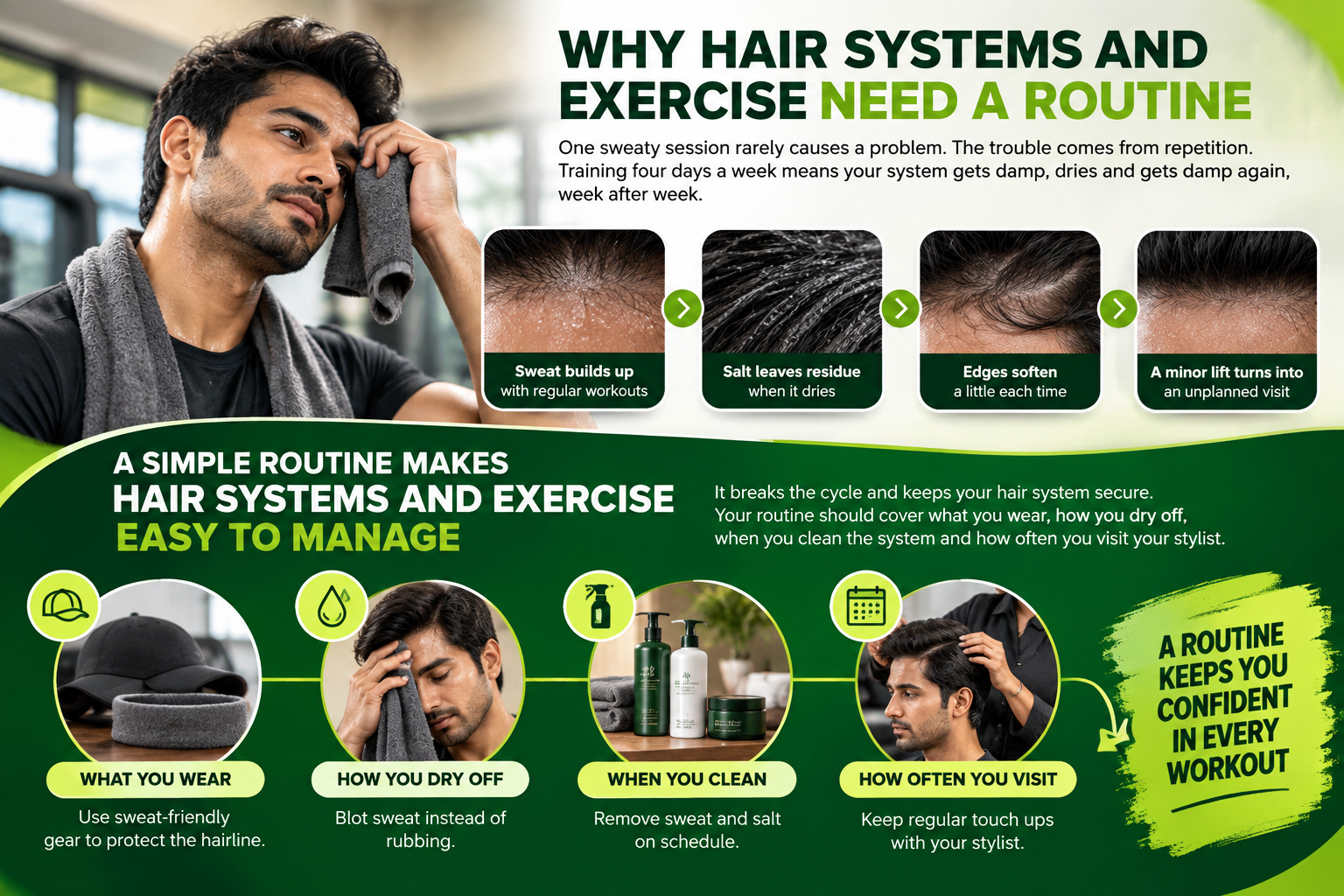 One sweaty session rarely causes a problem. The trouble comes from repetition. Training four days a week means your system gets damp, dries and gets damp again, week after week.
Without a routine, small issues stack up. Salt builds up, edges soften a little each time, and a minor lift turns into a visit you did not plan.
A simple routine makes hair systems and exercise easy to manage, because it breaks that cycle. It covers what you wear, how you dry off, when you clean the system and how often you visit your stylist. The seven habits below build it step by step.
7 ESSENTIAL TIPS FOR HAIR SYSTEMS AND EXERCISE
Start with the first two, because they shape everything else.
1. TELL YOUR STYLIST ABOUT YOUR HAIR SYSTEMS AND EXERCISE PLANS
What it means Share how often you train, what you do and where you train, before you choose or adjust your system.
Why it matters Each attachment method handles sweat differently, and a stylist can only pick the right one if they know your routine. A system built for desk days may struggle with daily training.
How to do it Tell your stylist at Needs Hair Studio how many sessions you do each week, what your main activities are and whether you train indoors or outdoors. Mention any steam, sauna or hot yoga. Ask which attachment method suits you and how often you should visit.
Example Picture two people with the same system. One trains twice a month, and the other trains six days a week. Their touch up schedules should not match.
Pro tip Update your stylist whenever your routine changes, such as starting marathon training or joining a new gym.
2. WEAR SWEAT GEAR THAT PROTECTS THE HAIRLINE
What it means Choose headbands, caps and towels that absorb moisture without dragging across the front edge.
Why it matters Tight bands and rough fabric rub the hairline for the whole workout. Over weeks, that friction loosens an edge faster than the sweat itself.
How to do it Pick a soft, wide, moisture wicking band and slide it on slowly. Never tug it across the front edge. Check that it sits comfortably, not tight.
Example Think of a plaster on your knee. A soft sleeve over it is fine, but a rough strap rubbing it daily will peel it.
Pro tip Wash sweat bands after every workout, so old sweat does not sit against your hairline.
3. BLOT SWEAT, NEVER RUB IT
What it means Press a clean cotton cloth gently against your head to absorb sweat, instead of wiping back and forth.
Why it matters Wiping drags across the edges and the surface in the same direction every time. Blotting removes moisture without pulling.
How to do it Keep a small clean cotton towel in your gym bag just for your head. Press it against your temples and front edge for a moment. Then lift it away instead of sliding it.
Example Think of drying a freshly painted wall. You would dab, not scrub, because scrubbing smears and lifts.
Pro tip Blot before sweat runs into the edge, since moisture that reaches the bond does the most harm.
4. CLEAN UP AFTER EVERY SESSION
What it means Remove sweat and salt after training, using the routine your stylist gave you.
Why it matters Dried salt makes hair stiff, and damp conditions linger when you leave sweat on the scalp. A short clean up after each session stops the build up.
How to do it Follow your stylist’s wash plan, including which shampoo and conditioner to use. Rinse gently, pat dry and let the system dry fully. Avoid direct high heat unless your stylist approves it.
Example Think of gym clothes. You would not wear them again unwashed after a sweaty session, and your hair system deserves the same fresh start.
Pro tip Ask your stylist how often you can wash the system safely, because the right gap depends on your attachment method.
5. CHOOSE YOUR WORKOUT CONDITIONS WITH CARE
What it means Heat and humidity make sweat worse, so choose conditions that keep your scalp cooler and your routine easy.
Why it matters A ventilated gym or a cool morning run puts far less sweat on the scalp than a packed hot room at noon. Less sweat means less wear.
How to do it Train early or late in summer, especially in Hyderabad, Kurnool or Delhi. Pick a ventilated gym. Ask your stylist before using steam rooms, saunas or hot yoga, because extra heat softens adhesives.
Example Think of butter left on a counter. In a cool kitchen it holds its shape, but in a warm one it softens quickly. Adhesive reacts to heat in a similar way.
Pro tip Stand near a fan between sets, so your scalp gets a chance to cool.
6. KNOW THE FRICTION POINTS IN YOUR WORKOUT
What it means Every activity touches your head differently, so find the contact points in yours.
Why it matters Bench pads, yoga mats, helmets and towels all press or rub the hair system. Knowing where helps you avoid damage you only notice later.
How to do it On a flat bench, keep your head from rubbing back and forth against the pad. In yoga, take care in poses where your head touches the mat. For cycling, wear a helmet, and read our guide to wearing a helmet over a hair system before your first ride. In team sports, ask your stylist about headgear.
Example Imagine a lifter who rubs the back of her head on the bench every set. The rubbing wears the base long before anything else does.
Pro tip Do a quick mirror check after each session to see whether any edge has started to lift.
7. PLAN YOUR TOUCH UPS AROUND YOUR TRAINING
What it means Regular sweating can wear a bond faster than a desk job does, so your maintenance schedule should reflect how hard you train.
Why it matters Moisture, heat and friction work on the adhesive every session. A planned visit takes little time, but an emergency repair means a missed workout and a stressful day.
How to do it Ask your stylist for a touch up gap that matches your training load. Book the next visit before you leave the studio. Mention early signs, such as an edge that lifts a little after workouts.
Example Imagine a runner who trains for a half marathon. During her peak weeks, her stylist suggests moving her visits closer together.
Pro tip Set a phone reminder for each visit, so the gap does not stretch without you noticing.
MISTAKES TO AVOID WITH HAIR SYSTEMS AND EXERCISE
| Mistake | Impact | Solution |
|---|---|---|
| Rubbing sweat with a towel | Lifted edges and dull hair | Blot gently with a clean cotton cloth |
| Skipping the clean up after training | Salt build up and an itchy scalp | Follow the wash plan your stylist gave you |
| Wearing a tight headband | Friction at the front edge | Choose a soft, wide, moisture wicking band |
| Using steam rooms without asking | Softened adhesive | Check with your stylist first |
| Never telling the stylist about your routine | A bond that does not suit your training | Share your weekly sessions and activities |
BEST PRACTICES FOR HAIR SYSTEMS AND EXERCISE
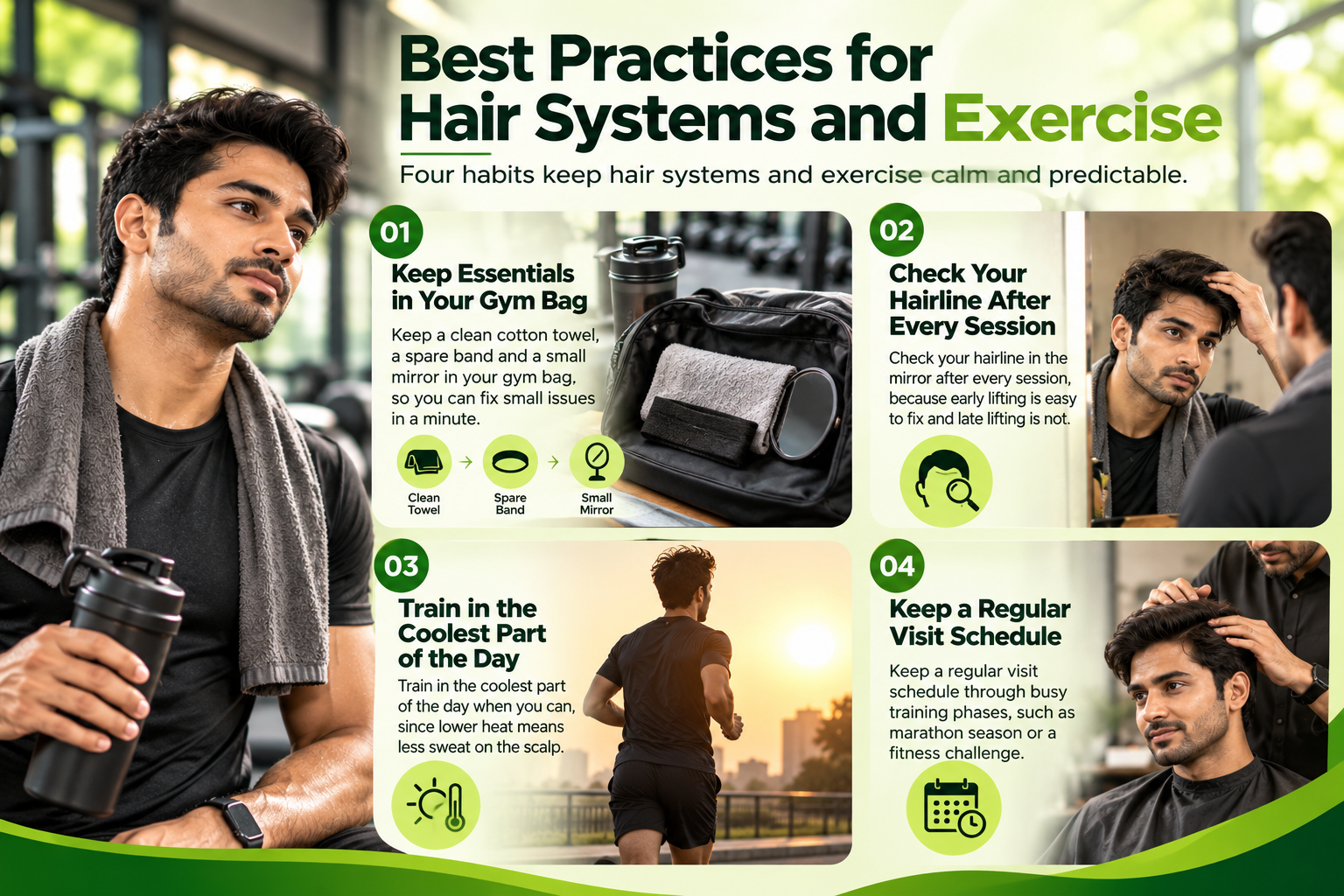 Four habits keep hair systems and exercise calm and predictable.
Keep a clean cotton towel, a spare band and a small mirror in your gym bag, so you can fix small issues in a minute.
Check your hairline in the mirror after every session, because early lifting is easy to fix and late lifting is not.
Train in the coolest part of the day when you can, since lower heat means less sweat on the scalp.
Keep a regular visit schedule through busy training phases, such as marathon season or a fitness challenge.
TOOLS AND PRODUCTS COMPARISON
These small items support hair systems and exercise every week.
| Item | Best For | When to Use |
|---|---|---|
| Clean cotton towel | Blotting sweat without rubbing | During and after every workout |
| Soft moisture wicking band | Catching sweat before it reaches the hairline | Running and high intensity sessions |
| Spare band | Swapping a damp band for a dry one | Long sessions |
| Small mirror | Checking the front edge | After each session |
| Stylist approved shampoo | Removing salt and sweat | Following your wash plan |
Ask your stylist which shampoo and conditioner suit your attachment method.
CASE STUDY: HAIR SYSTEMS AND EXERCISE IN PRACTICE
This is an illustrative scenario about hair systems and exercise, built from questions people often ask, not a named client.
Situation A man in Pune trains at the gym five days a week and wears a hair system. Within a few weeks, his front edge starts lifting after sessions.
Challenge He wipes his forehead with a gym towel between sets, wears a tight cap on cardio days and skips cleaning on busy evenings.
Action He tells his stylist about his routine and switches to blotting with a clean cotton cloth. He wears a soft wicking band, rinses after each session and moves his touch ups closer together.
Result His front edge stays flat through most sessions, and his visits become planned instead of urgent.
EXPERT TIPS FOR LONG TERM CONFIDENCE
Treat your first month of hair systems and exercise as a trial. Notice which sessions leave the system damp, where it rubs and how it looks the next morning. Report what you see at your first visit.
Bring your gym kit to a touch up. Your stylist can check how your band, cap or helmet sits and suggest changes.
Treat lifting as a signal, not a nuisance. If an edge lifts twice in one week, book the visit instead of pressing it down after every workout.
FREQUENTLY ASKED QUESTIONS ABOUT HAIR SYSTEMS AND EXERCISE
SWEAT AND CARE QUESTIONS
Can I work out every day with a hair system? Yes. Daily training is fine when you blot sweat, clean up after each session and keep a touch up schedule that matches your routine.
Will sweat damage my hair system? Sweat alone will not ruin a good system, but regular moisture, salt and friction wear the bond over time. Good habits keep that wear small.
How soon after a new fitting can I exercise? Ask your stylist, because the wait depends on the adhesive and the attachment method. Your stylist will give you a clear time.
Should I wash my hair system after every workout? Follow your stylist’s wash plan, since the right schedule depends on your attachment method and how much you sweat. Ask whether a gentle rinse is enough after light sessions.
Can I wear a headband or cap? Yes, if it is soft and sits without tugging at the front edge. Wash it often.
TRAINING QUESTIONS
Is it safe to lift weights with a hair system? Yes. Keep your head from rubbing against the bench pad, and blot sweat between sets.
Can I run outdoors in summer? Yes, but choose cooler hours and carry a clean cloth. Heat makes sweat heavier, so plan extra blotting on hot days.
Can I do yoga or inversions? Usually yes, but take care when your head touches the mat, and ask your stylist about hot yoga.
What about swimming? Swimming has its own rules because chlorine and sea water need a care plan, so ask your stylist before you dive in.
Can women and people with alopecia exercise with a hair system? Yes. The same habits apply. If your hair loss comes from alopecia, read our guide to hair systems for alopecia, and speak to a dermatologist about the underlying cause.
KEY TAKEAWAYS
- Tell your stylist how often and how hard you train.
- Choose soft, moisture wicking sweat gear that does not drag across the front edge.
- Blot sweat instead of rubbing it.
- Clean up after every session using your stylist’s wash plan.
- Train in cooler conditions, and ask before using steam rooms or saunas.
- Know the friction points in your workout, from bench pads to helmets.
- Plan your touch ups around your training load.
CONCLUSION
Hair systems and exercise get along well once you plan for sweat. Blotting, a proper clean up, smart workout conditions and a visit schedule built around your training do most of the work.
The people who struggle with hair systems and exercise mostly never changed their routine after the hair system arrived. The people who train happily adjusted a few habits and told their stylist the truth about how hard they train.
BOOK A CONSULTATION ABOUT HAIR SYSTEMS AND EXERCISE
If you train regularly, talk to a stylist at Needs Hair Studio. Share your weekly sessions, your favourite activities and your city, and ask them to match the attachment method and touch up schedule to your routine.
Book a consultation with Needs Hair Studio this week, before your next training block begins.