
A receding hairline is one of the first signs of hair loss that many people notice, and it often bothers them more than thinning anywhere else. The front edge frames your face, so even a small change shows in every photo. If you want to cover that area without an operation, hair fixing for receding hairline is one of the main options to consider. This guide explains how it works, what the process involves, and what daily life looks like afterwards, so you can decide with realistic expectations.

What a Receding Hairline Looks Like and Why It Happens
A receding hairline usually starts at the temples. The corners move back first, which creates an M shape, and the centre of the hairline follows later. Some people also notice thinning at the front centre, so the hairline looks softer and less dense. This pattern often runs in families, and hormones play a role. Pattern hair loss is the most common cause in men, and women can see a similar change at the front.
Other causes exist, too. Stress, illness, nutrient gaps, some medicines and tight hairstyles can all thin the front edge. Therefore, see a doctor first if the change is sudden, patchy or comes with itching, pain or scaling. The NHS guide to hair loss lists the causes worth ruling out. Once you know the cause, you can pick a solution that fits it.
How Hair Fixing for Receding Hairline Works
Hair fixing attaches a custom hair piece to your scalp so that it covers a thinning or bald area. The piece uses a thin base with real or synthetic hair, and a specialist matches its colour, texture and density to your own hair. Then the specialist secures it with medical-grade adhesive or tape. Because the piece sits on top of the skin, nothing goes under it, and you can leave the same day with a complete hairline.
The method suits the front edge well. A fixed piece covers the exact area that has receded, while your own hair at the sides and back blends into it. As a result, the finished look reads as one continuous hairline. You can read more about hair patch options in Hyderabad if you want to see how the base types differ.
Why Hair Fixing for Receding Hairline Suits the Front Edge
A receding hairline has a clear shape, and that makes it a good match for a fitted piece. The specialist can rebuild the temples and the front edge in a single visit, and the result appears right away. Meanwhile, you keep all the hair you still have, since the piece covers only the thinning zone.
The method also gives you control over the design. You can choose a slightly lower hairline, soften the temple points or keep the current height and simply fill the gaps. In addition, you can change the plan later if your hair loss progresses, because the next piece follows the new shape. That flexibility matters, since hair loss rarely stops at one stage.
Designing a Natural Hairline
The hairline decides whether the piece looks natural, so a good specialist spends most of the planning time here. They usually start with your age, face shape and current hairline. A mature, slightly higher line often looks better than a low, youthful one, because it matches your face and the hair around it. Temple points should stay soft and a little uneven. A straight, sharp line looks artificial, even on a high-quality piece.
Density matters just as much. The very front should be sparse, with fine single hairs, and density should build gradually toward the crown. Ask the specialist to show you the design on your head with a pencil or a template before they start. Moreover, check it in daylight and from the side, since those views expose small errors that a mirror at the front hides.
The Hair Fixing for Receding Hairline Process, Step by Step
The process follows a few clear stages. Consultation comes first. The specialist examines your scalp, discusses your goals and checks for irritation or infection. Next, they measure the area and take a template of the hairline. You then choose the colour, length and density, and the specialist prepares the piece. Colour matching takes care, because natural black hair has brown and red undertones that make a flat shade look obvious.
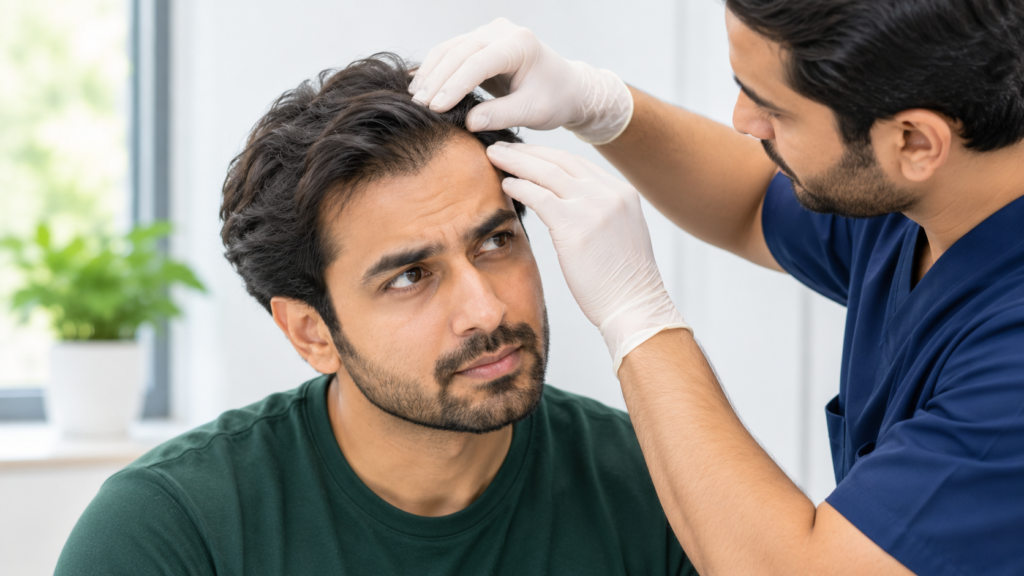
At the fitting, the specialist cleans the scalp, positions the piece, secures it and cuts the hair to blend with your own. Expect to check the result in a mirror from several angles and to ask for small changes. Finally, you receive care instructions and a date for the first refit. A clear refit plan keeps the piece looking fresh.
What to Expect in the First Week
After the fitting, your head will feel the piece for a few days. The edge may feel slightly tight, and you may touch your hairline often. Both reactions fade quickly, because the base is thin and flexible. Avoid long hot showers, saunas and heavy workouts for the first 48 hours, so the bond can set. Also sleep on a clean, smooth pillowcase and keep your hands away from the front edge.
If you notice burning, strong itching or lasting redness, contact your specialist at once. A reaction to adhesive is possible, so ask for a small skin allergy test before the first bond. By the end of the week, most people stop thinking about the piece during the day.
Daily Care and Refits
Daily care stays simple. Wash the piece two to three times a week with a mild shampoo and lukewarm water, and let it dry fully. Brush gently from the ends upward, and keep heavy oils away from the edge, since they weaken adhesive. Heat and sweat also loosen the bond, so rinse your scalp after workouts and on hot days.
Most pieces need a professional refit every three to six weeks. During the refit, the specialist cleans the scalp, replaces the bond, trims the hair and checks the front edge. A base lasts from a few months to a year, depending on wear and the type you chose. For more on the methods behind this, read about hair bonding and other attachment options.
Is Hair Fixing for Receding Hairline Right for You?
This approach suits people whose hair loss is visible and who want a result without waiting. It works for an early recession at the temples and for more advanced loss across the front. It also suits people who cannot use medication or prefer not to have an operation. If you like variety, you can change the style of the piece over time.
On the other hand, it asks for upkeep. If you dislike regular appointments, cannot wear adhesive or have an active scalp problem, another route may fit better. Likewise, if your hair is only just starting to recede, you may prefer to wait and watch. Speak to a doctor about medical options too, because a hair fixing specialist cannot advise you on medication.
Common Concerns
Most readers ask the same few questions. Will it look fake? A well-matched piece with a soft hairline passes in daylight, so the design and the haircut matter more than anything else. Will it damage my own hair? Damage usually comes from rough removal or poor scalp care, not from wearing the piece. Can I exercise or swim? Yes, with the right bond and a quick rinse afterwards. Will wind or rain move it? A secure bond holds through both, although a loose corner can lift, so fix small lifts early.
Another concern is how people react. Most people notice a better haircut, not a hair piece. If someone asks, you decide how much to share, and a short, relaxed answer usually ends the topic. If you plan to fly or go on long trips, see these tips on travelling with a hair system.
Choosing Where to Get Hair Fixing for Receding Hairline in Hyderabad
The provider shapes the result as much as the method does. When you look for a hair fixing center in Hyderabad, visit in person and ask who will measure, cut and refit your piece. Look at samples in daylight and ask how long the team has done this work. Check that the center keeps records of your colour and density, so each refit stays consistent. In addition, ask what happens if the bond irritates your skin.
Compare at least two centers before you decide, and take notes at each visit. For a side-by-side look at the main methods, read how bonding, weaving and clips compare, and browse the frequently asked questions for quick answers.
Making Your Decision
A receding hairline can feel like a large change, yet the choices are clearer than they seem. Start by confirming the cause with a doctor. Then decide how much upkeep you accept, visit a specialist and review a hairline design before you commit.
Hair fixing for receding hairline works best when you set realistic expectations, follow the care plan and keep your refits on schedule. If you want to explore other pieces, see the page on custom hair systems.