If you ride to work every day, you have probably wondered whether you can wear a helmet with a hair system. The doubt tends to hit right before the ride, when you stand at the mirror with the helmet in your hand. Will the front edge lift? Could the style go flat? And what if the whole thing comes off with the helmet?
Wearing a helmet with a hair system brings a bigger worry than most wearers face. A helmet sits snug against the hairline, the temples and the crown, and those are the exact spots people look at first. It also traps heat, so your scalp sweats more than it does at a desk.
Here is the good news. Yes, you can wear a helmet with a hair system, and plenty of riders in Hyderabad, Bangalore and Pune do it every day. You only need the right fit, a few small habits and a maintenance plan that matches your commute.
This guide explains what happens under the helmet, why it deserves extra thought, and seven practical habits that protect both your head and your hair system.
QUICK ANSWER: IS A HELMET WITH A HAIR SYSTEM SAFE?
Yes. A helmet with a hair system is safe, because the system is a thin layer and does not change how the helmet protects your head. Pick a helmet that fits snugly with the system on, add a thin breathable liner, and take the helmet off slowly so the front edge stays flat. Heat and sweat cause most of the trouble, not the helmet itself. Never skip the helmet to save your hairstyle, because Indian law requires one and your head matters more.
WHAT ACTUALLY HAPPENS TO A HAIR SYSTEM UNDER A HELMET
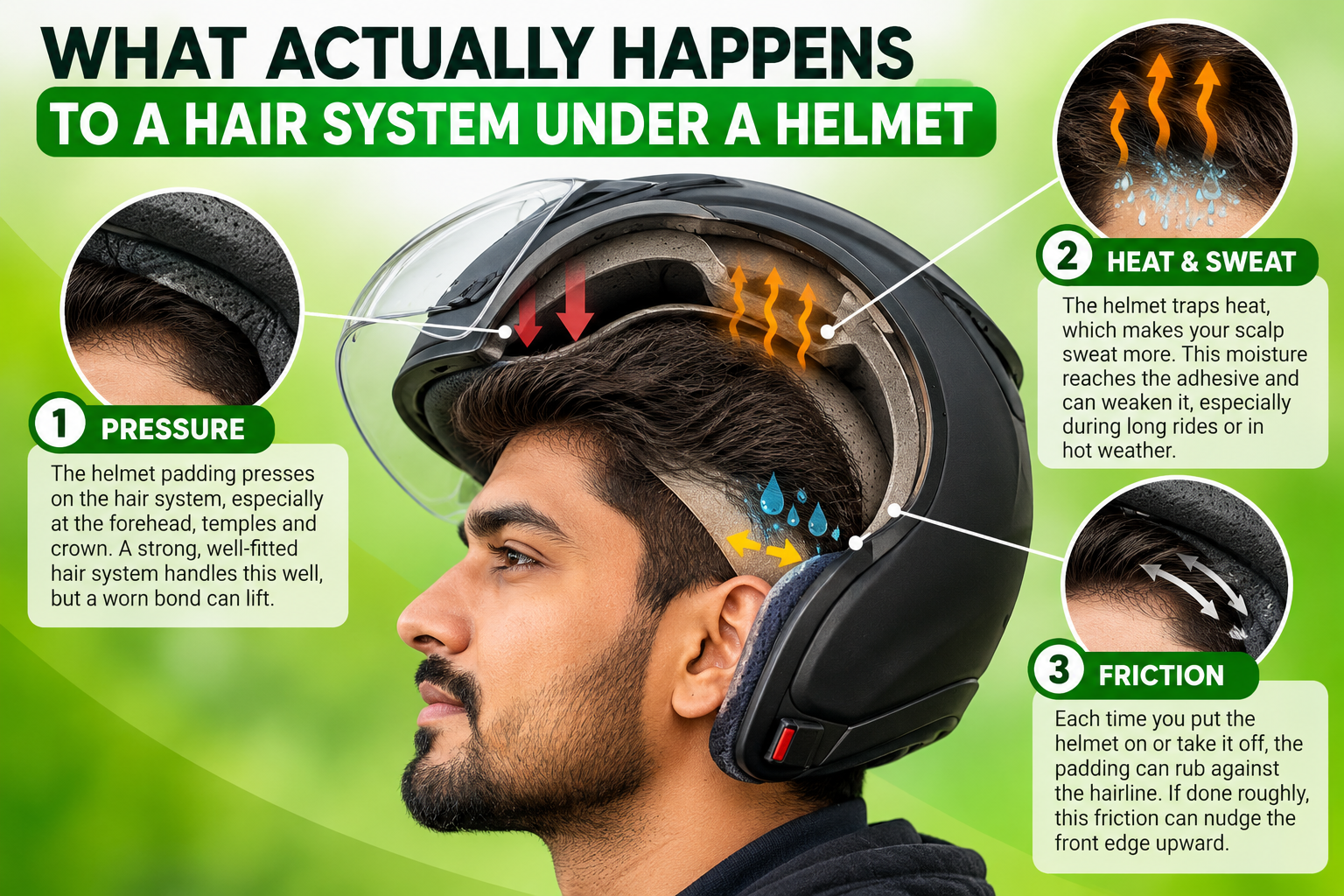
A hair system sits on your scalp with tape, glue or clips, depending on the method you chose with your stylist. A helmet then presses on top of it for the whole ride. Three things happen during that time.
First comes pressure. The padding presses on the base and the edges, mostly around the forehead and the sides. A fresh bond handles this well, but a worn one can shift.
Next comes heat. The helmet traps warmth, your scalp sweats and the moisture reaches the adhesive. Softer adhesive means lifting at the temples by the time you reach the office, especially in a Hyderabad summer.
Then comes friction. Each time you put the helmet on or pull it off, the padding drags across your hairline. Done carelessly, that drag nudges the front edge upward.
None of this means your hair system is weak or that helmets are off limits. It means a helmet with a hair system puts three small stresses on the bond, and each one has a simple fix.
WHY A HELMET WITH A HAIR SYSTEM NEEDS EXTRA THOUGHT
Many wearers treat the helmet as an afterthought, and that is where trouble starts with a helmet with a hair system. A helmet bought without trying it over the system can end up too tight or too loose. A tight one squeezes the edges, while a loose one rocks and rubs them.
The cost shows up quickly. You get lifting edges, a flattened front, sweat marks and sometimes skin irritation from trapped moisture. The seven habits below stop most of that, so you can think about traffic instead of your hairline.
7 ESSENTIAL TIPS FOR WEARING A HELMET WITH A HAIR SYSTEM
Work through these in order, because the first three matter before you ever start the engine.
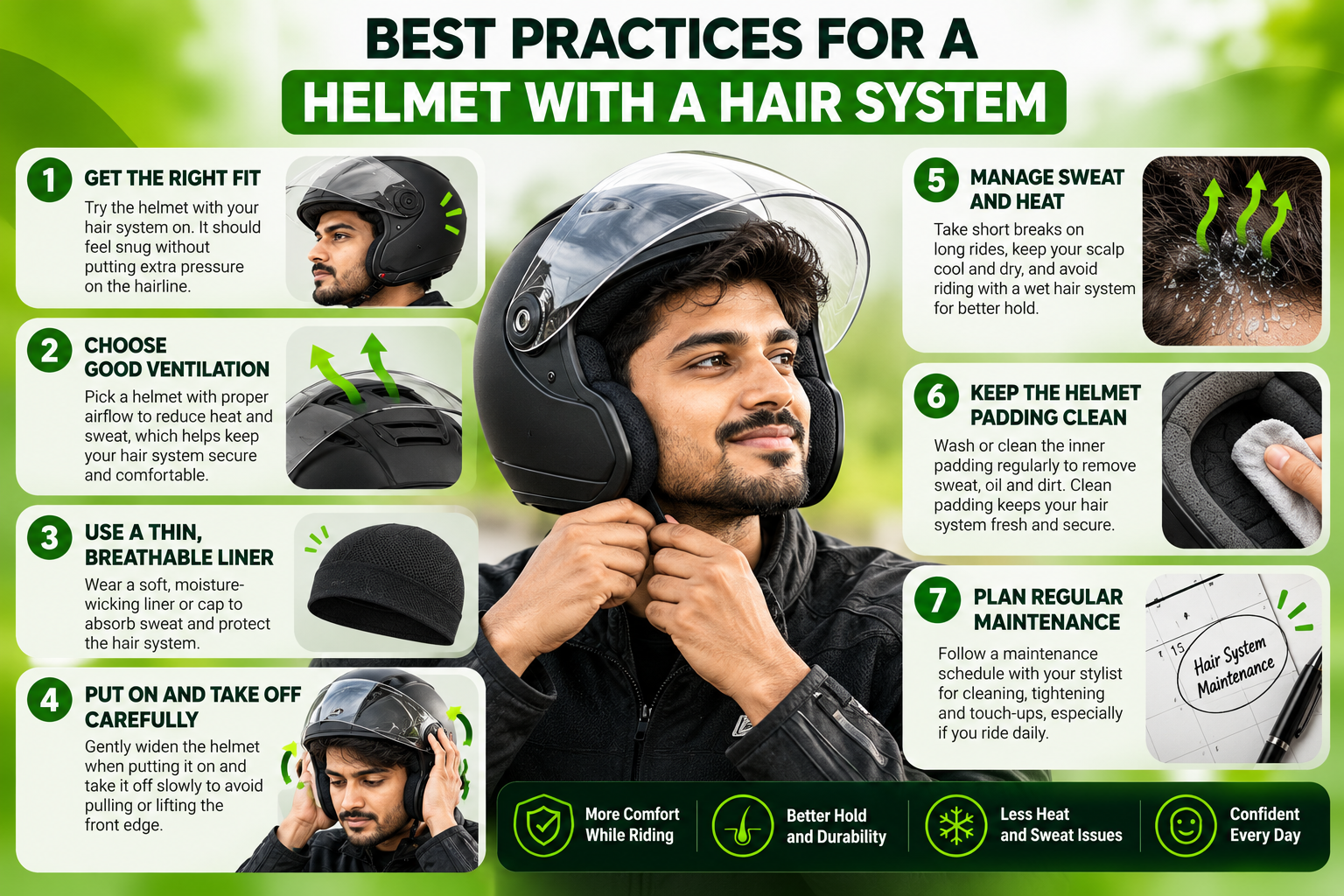
1. BUY A HELMET WITH A HAIR SYSTEM ON YOUR HEAD
What it means Try every helmet on while you are wearing your hair system, not before your fitting and not after a haircut.
Why it matters The system adds a thin layer, so a helmet that fit your bare head can feel tighter at the forehead. A tight helmet presses the front edge, and a loose one rocks and rubs it.
How to do it Visit the helmet shop after your fitting and keep the system on for the trial. Wear each helmet for about ten minutes so pressure spots show up. The fit should feel snug all round without pinching the hairline. Look for the ISI mark, which shows the helmet meets the standard set by the Bureau of Indian Standards.
Example Picture two riders who buy the same model. One tries it on bare headed and later finds the front edge squeezing his hairline. The other tries it with the system on, spots the pressure straight away and picks a different shape.
Pro tip After a new fitting, ask your stylist how long the adhesive needs to settle before your first helmet ride.
2. PICK VENTILATION OVER LOOKS
What it means Helmets differ in how much air they let through, and that matters more for you than the colour or the graphics.
Why it matters Airflow carries sweat away from the base. A helmet with a hair system and little airflow leaves your scalp warm and damp, and warm adhesive softens.
How to do it Look for vents at the front and top, and choose a helmet with a removable inner liner. A full-face helmet covers more of your face, but a well vented one can still run cooler than an open-face model with no vents. Ask the shop which model lets in the most air, then test it for ten minutes.
Example Think of a steel tiffin box left in the sun. Whatever is inside gets warm and soft. A helmet with no vents treats your adhesive the same way.
Pro tip Keep the vents open on hot days and in stop and go traffic, since slow riding cuts the airflow.
3. WEAR A THIN, BREATHABLE LINER
What it means A liner is a thin cotton or moisture wicking cap that sits between your hair system and the helmet padding.
Why it matters The liner takes the friction from the padding and soaks up sweat before it reaches the adhesive. It also keeps the helmet padding cleaner.
How to do it Buy a thin liner in a light colour and wear it for the whole shop trial, because the helmet must still fit snugly with the liner on. Put the liner on slowly and smooth it flat. Do not tug it across the front edge. Wash it every day or two.
Example Consider a commuter in Bangalore who rides forty minutes each way in slow traffic. Her liner makes a helmet with a hair system far more comfortable, because it absorbs the sweat that would otherwise sit on the tape.
Pro tip Keep two liners, so one is always clean and dry.
4. TAKE OFF A HELMET WITH A HAIR SYSTEM THE RIGHT WAY
What it means How you put the helmet on and take it off matters as much as the helmet itself.
Why it matters Most lifting happens in the few seconds when the padding drags across your forehead. A fast yank pulls along the front edge and loosens the bond.
How to do it Unbuckle the strap fully. Hold the helmet at both sides and spread it slightly, then lift it up and off in one smooth motion without dragging it over your forehead. To put it on, tilt your head slightly forward, slide the helmet down over the crown and fasten the strap.
Example Think of peeling a sticker. Pull it slowly and it comes off clean, but rip it from the corner and the edge curls. Your front edge reacts the same way.
Pro tip Check your hairline in a mirror after every ride. If the edge has lifted slightly, press it gently flat and book a touch up.
5. MANAGE SWEAT AND HEAT ON LONG RIDES
What it means Keep your scalp as cool and dry as you can under a helmet with a hair system, because moisture loosens most bonds.
Why it matters Sweat mixes with scalp oil and softens the adhesive. A bond that holds well in a cool room can creep at the edges after an hour on the road in a Hyderabad or Kurnool summer.
How to do it Take the helmet off at long stops, once you are parked and safe, and let air reach your head. Blot sweat with a clean cotton cloth instead of rubbing it. Also let the system dry fully after washing, before you put a helmet over it.
Example Think of a plaster on sweaty skin. It peels at the edges first, and tape behaves the same way.
Pro tip In Delhi’s humid weeks before the monsoon, carry a clean cotton handkerchief for blotting.
6. KEEP THE HELMET PADDING CLEAN
What it means The inside of your helmet collects sweat, oil and dust, and all of it ends up touching your hair system.
Why it matters Oil and grime on the padding transfer to the base and the edges, so they wear down tape and glue over time. Dirty padding also smells, and you do not want to notice that in a meeting.
How to do it Remove the inner liner if your helmet allows it, then wash it with mild soap and cool water. Dry it fully in the shade before you put it back. Wipe the rest of the interior with a damp cloth once a week, and replace padding that has gone flat or cracked.
Example A pillowcase you never wash ends up against your skin every night. Helmet padding works the same way, only closer to your hairline.
Pro tip After a wet ride, leave the helmet open in a ventilated spot so it dries overnight, and keep it out of direct sun on the bike seat.
7. PLAN YOUR TOUCH UPS AROUND YOUR HELMET WITH A HAIR SYSTEM
What it means Daily riding can wear a bond faster than a desk job does, so your maintenance schedule should reflect how you travel.
Why it matters Pressure, heat and sweat all work on the adhesive every day. If you wait until the edge lifts in public, you get an emergency fix instead of a planned visit.
How to do it Tell your stylist at Needs Hair Studio that you ride daily and how long your commute is. Ask which attachment method suits a rider and whether your touch up gap should be shorter. Book the next visit before you leave the studio.
Example Imagine a rider in Warangal who books a touch up every month, whatever the weather. When summer arrives, his stylist suggests moving each visit a week earlier.
Pro tip Set a phone reminder on the day of every visit, so the gap never stretches without you noticing.
MISTAKES TO AVOID WHEN WEARING A HELMET WITH A HAIR SYSTEM
| Mistake | Impact | Solution |
|---|---|---|
| Skipping the helmet to save the style | Serious injury risk and a traffic fine | Wear a certified helmet and fix the fit instead |
| Buying the helmet before the fitting | Pressure on the front edge or a loose, rocking fit | Try helmets on with the system in place |
| Yanking the helmet off after the ride | Lifted edges at the hairline | Unbuckle fully and lift it off slowly |
| Riding with a damp system | Softer adhesive, odour and slipping | Let the system dry completely before you ride |
| Ignoring helmet hygiene | Sweat and oil weaken the bond | Wash the liner often and wipe the padding weekly |
BEST PRACTICES FOR A HELMET WITH A HAIR SYSTEM
 Keep a spare liner and a small microfibre cloth in your bike storage, so you can blot sweat the moment you park.
Choose a simple, low product style on riding days, because heavy styling product mixes with sweat and looks greasy once the helmet comes off.
Check your hairline in a mirror before you walk into the office, because a helmet with a hair system can leave a mark you only notice later.
Pick a helmet with removable, washable padding, so cleaning it never feels like a chore.
TOOLS AND PRODUCTS COMPARISON
| Product Type | Best For | Helmet Suitability |
|---|---|---|
| Thin cotton liner | Daily commutes and sweat control | High |
| Moisture wicking liner | Long rides in hot cities | High |
| Vented full-face helmet | Highway and long rides | High |
| Vented open-face helmet | Short city trips | Medium, since it breathes well but covers less |
| Helmet with removable padding | Easy, regular cleaning | High |
| Microfibre cloth | Blotting sweat at stops | High |
Prices vary by brand and by where you buy, whether that is a helmet shop in Hyderabad or an online store.
CASE STUDY: A TYPICAL DAILY RIDER
This is an illustrative scenario built from questions riders often ask, not a named client.
Situation A rider in Hyderabad commutes by bike every weekday. By evening his hair system looks flat, and the front edge has started to lift.
Challenge He bought his helmet before his fitting, rides without a liner and pulls the helmet off quickly at every stop.
Action He tried helmets again with the system on and chose a ventilated model that fit evenly. He added a thin cotton liner, started taking the helmet off slowly and moved his touch up visits a week earlier during summer.
Result The front edge stayed flat on most rides, and his touch ups became planned visits instead of emergency stops.
EXPERT TIPS FOR LONG TERM CONFIDENCE
Share your riding routine with your stylist. Mention how long you ride, how hot it gets and whether you wear a full-face or open-face helmet, because all of this shapes the adhesive and the visit schedule.
Bring your helmet to your next touch up. Your stylist can see where a helmet with a hair system presses and suggest a stronger bond at that spot.
Treat lifting as a signal. If an edge lifts twice in one week, book the visit instead of pressing it down every morning.
FREQUENTLY ASKED QUESTIONS ABOUT A HELMET WITH A HAIR SYSTEM
FIT AND SAFETY QUESTIONS
Can you wear a helmet with a hair system every day? Yes. Daily wear is fine when the helmet fits snugly, you take it off slowly and you plan your touch ups around your riding.
Will a helmet damage my hair system? A helmet will not damage a good system on its own. Rough removal, heat, sweat and dirty padding cause the wear, and you can control all four.
Do I need a bigger helmet for a hair system? No. The base is thin, so most riders keep their usual size. Try the helmet on with the system in place and pick the one that feels snug and even.
Is a full-face or open-face helmet better? Both work. A full-face helmet protects more but runs warmer, so choose a vented one. An open-face helmet breathes better but covers less.
Is a helmet with a hair system comfortable in summer? Yes, if the helmet is vented and you wear a thin liner. Take it off at long stops so your scalp can cool down.
Can I skip the helmet on a short ride to protect my hair system? No. Indian law requires a helmet for riders and pillion passengers, and a fall costs far more than a lifted edge.
CARE AND MAINTENANCE QUESTIONS
How soon can I ride after getting a new hair system? Ask your stylist, because the wait depends on the adhesive and the attachment method. Your stylist will give you a time before your first helmet ride.
Should I wear a liner under my helmet? Yes. A thin cotton or moisture wicking liner cuts friction and soaks up sweat, but check that the helmet still fits snugly with it on.
Why does the front of my hair system lift after riding? Heat, sweat and friction from the padding usually cause it. A liner, slower removal and a shorter touch up gap fix most cases.
How often should I wash the helmet padding? Wash a removable liner every few days and wipe fixed padding once a week. Wash more often in hot weather.
Can I style my hair system before a ride? Yes, but use very little product. Heavy product mixes with sweat and looks greasy once the helmet comes off.
KEY TAKEAWAYS
- Wear the helmet on every ride and fix the fit instead of skipping it.
- Try helmets on with your hair system in place.
- Choose a vented model with removable padding.
- Add a thin cotton or moisture wicking liner.
- Lift the helmet off slowly and never drag it across your forehead.
- Blot sweat instead of rubbing it, and let the system dry before you ride.
- Wash the liner, wipe the padding and book touch ups around your commute.
CONCLUSION
Wearing a helmet with a hair system is easier than most people expect. A helmet that fits with the system on, a thin liner, a gentle removal habit and a touch up schedule that respects your commute are usually all it takes to ride with confidence.
The riders who struggle are mostly the ones who bought the helmet first and thought about the hair system later. The riders who sail through are the ones who planned the fit and the routine from the start.
READY TO RIDE WITHOUT WORRY?
If you want a helmet with a hair system that stays comfortable on every ride, talk to a stylist at Needs Hair Studio. Bring your helmet, describe your commute, and ask them to match the attachment method and touch up schedule to your route and your city.
Book a consultation with Needs Hair Studio this week, before the festival season gets busy.