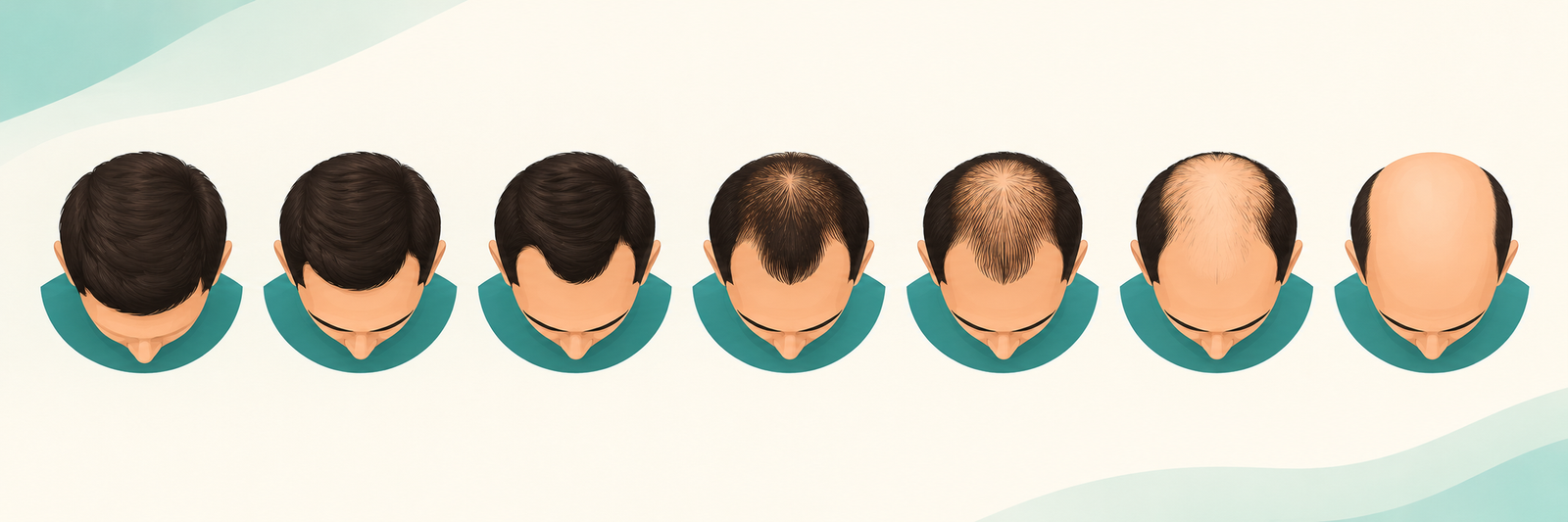
Hair loss stages follow a gradual pattern for many people. It often begins with a slightly receding hairline. Other people notice thinning around the crown or a widening parting. Over time, these changes become more noticeable and affect how you feel about your appearance.
One of the most common questions people ask is: “At what stage of hair loss should I consider a hair patch?”
Understanding the different hair loss stages helps you explore suitable options. While treatments can help manage certain types of hair loss, non-invasive hair replacement offers another approach for people who want immediate coverage.
This guide explains each of the hair loss stages and how specialists classify them. It also shows where a hair patch fits into your hair replacement plan.
What Are the Different Hair Loss Stages?
Hair loss has several causes. Genetics and hormonal changes are common ones. Medical conditions and stress also contribute. So do nutritional deficiencies and certain medications. You can read more about the causes of hair loss from the American Academy of Dermatology and MedlinePlus.
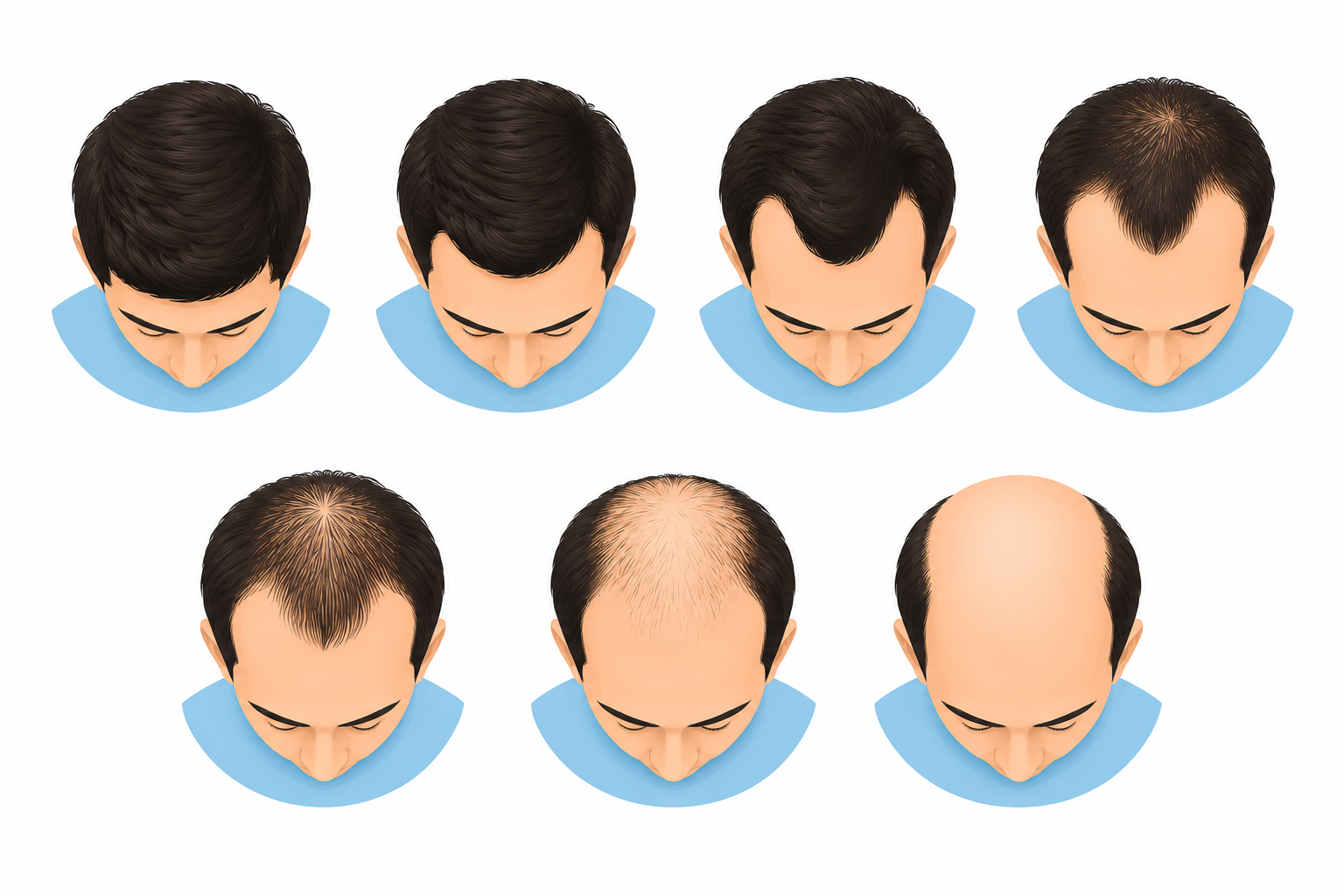
For men with pattern hair loss, specialists commonly use the Hamilton-Norwood Scale to describe how baldness progresses. It identifies seven hair loss stages, from minimal hairline recession to extensive hair loss across the top of the scalp.
Specialists use this scale mainly for male pattern baldness. Women experience hair loss differently, so the pattern often involves thinning around the crown or a widening central parting.
Understanding the 7 Hair Loss Stages
Stage 1: No Significant Hair Loss
At this stage, the hairline generally stays unchanged, with little or no noticeable thinning.
Most people do not need cosmetic hair replacement at this point. However, if you notice unusual shedding or sudden changes in hair density, consult a dermatologist to understand the underlying cause.
Stage 2: Slight Hairline Recession
The hairline begins to recede slightly around the temples. This can appear as a subtle M-shaped hairline.
Many people consider this a normal adult hairline rather than significant baldness.
Hair patch suitability: Usually not necessary unless there is a specific cosmetic concern or unusual thinning.
Stage 3: Noticeable Hairline Recession
Hair loss becomes more visible around the temples, which creates a deeper M-shaped hairline.
Specialists often consider this an early stage of significant male pattern hair loss. Some individuals also experience thinning around the crown.
Hair patch suitability: A hair patch is an option if the individual wants additional coverage. However, other options can also be appropriate.
Stage 4: Hairline Recession and Crown Thinning
At this stage, hair loss becomes more noticeable at the front and crown.
A strip of hair can still separate these two areas, but overall density begins to decrease.
Hair patch suitability: A hair patch is a practical cosmetic option for individuals who want to cover a specific thinning or bald area.
Stage 5: Larger Areas of Hair Loss
The areas of hair loss at the front and crown grow larger, and the band of hair between them becomes narrower.
The scalp becomes more visible, especially under bright lighting.
Hair patch suitability: Many individuals at this stage explore non-invasive hair replacement because styling alone makes coverage harder to achieve.
Stage 6: Advanced Hair Loss
The frontal hairline and crown areas connect, which leaves significant hair loss across the top of the scalp.
Hair generally remains around the sides and back, although density varies.
Hair patch suitability: A customised hair patch or hair system provides coverage across a larger area, depending on scalp condition and the individual’s requirements.
Stage 7: Extensive Hair Loss
This is the most advanced of the hair loss stages in the Hamilton-Norwood classification.
Most of the hair on top of the scalp disappears, leaving a band of hair around the sides and back.
Hair patch suitability: A hair patch or larger hair system offers cosmetic coverage. Discuss the design and attachment method with a specialist. Also ask about maintenance requirements.
Important: The Norwood scale describes a pattern of hair loss. It is not a diagnosis or a treatment recommendation.
What Is a Hair Patch?
A hair patch is a customised hairpiece that covers a specific area of thinning or baldness.
It typically consists of a base material with hair attached to it. Specialists customise the patch according to factors such as:
-
Natural hair colour
-
Hair texture and density
-
Hairline shape
-
Scalp measurements
-
Desired hairstyle
-
Lifestyle and maintenance preferences
A professionally fitted hair patch blends with existing hair and provides immediate cosmetic coverage without any medical procedure.
Learn more about Hair Patch Services at Needs Hair Studio.
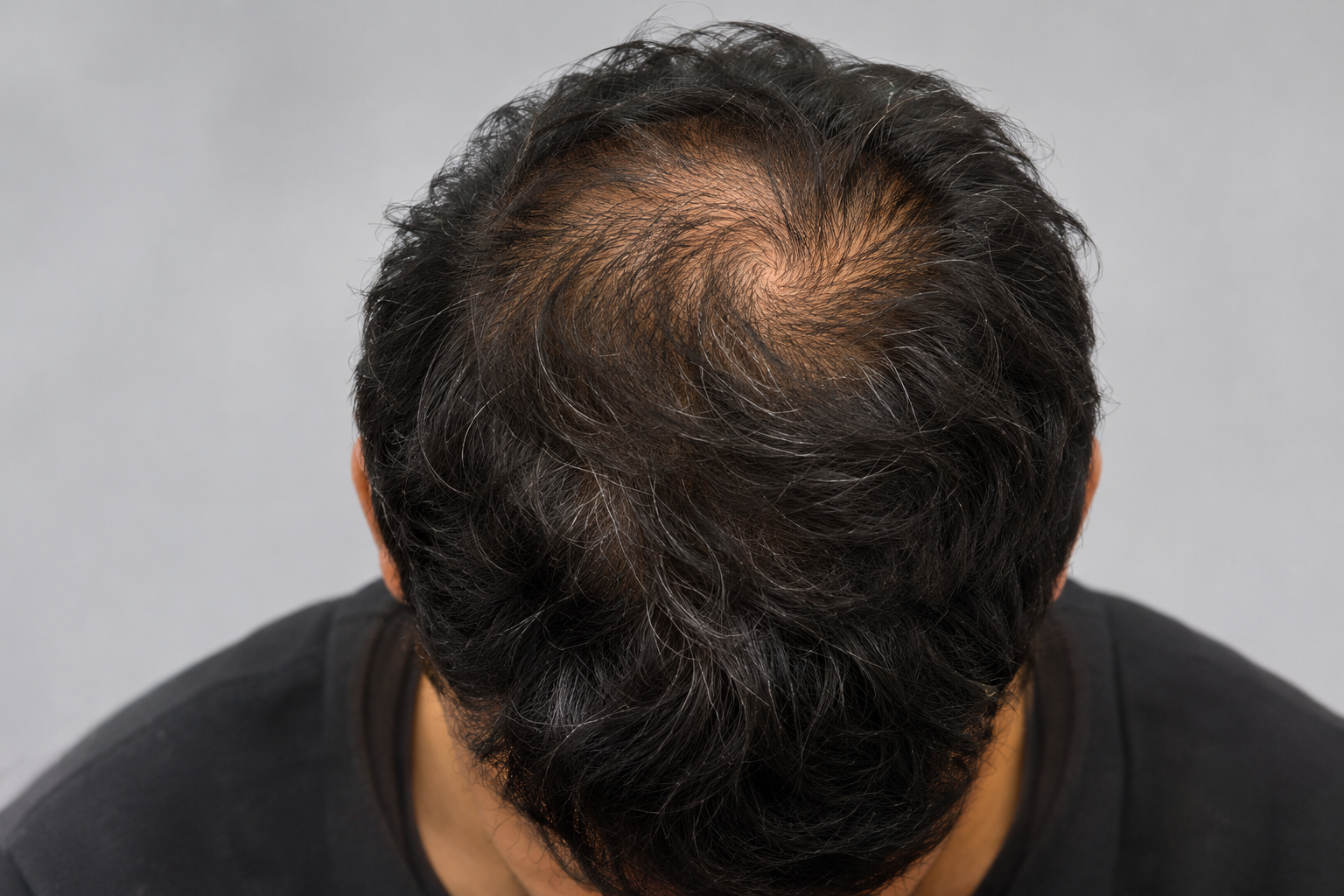
Where Does a Hair Patch Fit in Different Hair Loss Stages?
A hair patch is not limited to one of the hair loss stages.
Suitability depends on the size of the affected area and the amount of existing hair. Scalp condition also matters. So do personal preferences and maintenance expectations.
| Hair Loss Stage | Common Hair Loss Pattern | Hair Patch Consideration |
|---|---|---|
| Stage 1 | Minimal hairline changes | Usually unnecessary |
| Stage 2 | Slight temple recession | Option for specific concerns |
| Stage 3 | Noticeable temple recession | Possible cosmetic coverage |
| Stage 4 | Front and crown thinning | Targeted coverage |
| Stage 5 | Larger bald areas | Broader coverage |
| Stage 6 | Extensive top scalp loss | Custom hair system |
| Stage 7 | Advanced baldness | Larger customised system |
These are general considerations, not individual recommendations.
Hair Patch vs Medical Hair Restoration: Which Should You Consider?
Hair patches and medical restoration procedures serve different purposes.
A medical restoration procedure moves hair follicles from one area of the scalp to another under clinical care. A hair patch provides cosmetic coverage without any procedure.
Here are some general differences:
| Feature | Hair Patch | Medical Hair Restoration |
|---|---|---|
| Procedure | Non-invasive | Clinical procedure |
| Results | Immediate cosmetic coverage | Gradual growth over time |
| Recovery | No recovery period | Requires post-procedure recovery |
| Maintenance | Regular servicing required | Depends on individual hair and scalp care |
| Suitable for | Various patterns of hair loss | Selected individuals based on donor hair and medical assessment |
Neither option is automatically better for everyone.
A dermatologist helps determine whether medical treatment or a restoration procedure is appropriate. A hair replacement specialist, meanwhile, explains cosmetic options such as hair patches and hair systems.
You can also read more about non-invasive hair replacement in Hyderabad.
Do Hair Loss Stages Determine the Hair Patch Cost?
Not necessarily. The hair loss stages give a rough idea of how large an area needs coverage, but the cost depends on several factors, including:
-
Coverage area
-
Hair quality and material
-
Base material
-
Customisation requirements
-
Attachment method
-
Maintenance and servicing
A larger area of hair loss often requires a larger hair system, but the final cost depends on the complete customised solution.
If you compare options, it helps to understand the costs before making a decision. Ask about fitting costs first. Servicing and replacement costs matter too.
Explore Hair Bonding in Hyderabad: A Complete Guide to understand another non-invasive hair replacement option.
When Should You Consider a Hair Patch?
Explore a hair patch if:
-
Hair loss affects your confidence.
-
You want immediate cosmetic coverage.
-
You prefer a non-invasive option.
-
Styling your existing hair no longer provides the coverage you want.
-
You want to understand alternatives to medical hair restoration.
However, if your hair loss is sudden or patchy, seek medical evaluation before considering cosmetic hair replacement. Pain, redness, itching and irritation also call for that step.
The American Academy of Dermatology recommends identifying the cause of hair loss before choosing a treatment.
Why a Professional Consultation Matters
Hair loss has different causes, so not every type requires the same approach. Knowing which of the hair loss stages you are in is a useful starting point, but it is not a substitute for expert advice.
A consultation helps you understand:
-
Your hair loss pattern
-
The area requiring coverage
-
Your existing hair density
-
Available hair replacement options
-
Maintenance requirements
-
Expected costs
At Needs Hair Studio, consultations help clients explore hair bonding and hair fixing. Clients also learn about hair patches and hair weaving, along with other non-invasive options that match their individual requirements.
Explore Hair Replacement Services at Needs Hair Studio.
Frequently Asked Questions About Hair Loss Stages
1. At which of the hair loss stages should I get a hair patch?
No single stage fits everyone. Consider a hair patch when thinning or bald areas become noticeable and you want immediate cosmetic coverage.
2. Can I wear a hair patch in Stage 3 of the hair loss stages?
Yes, a hair patch is an option during Stage 3 if it suits the affected area and your personal preferences. However, not everyone needs one.
3. Is a hair patch suitable for the advanced hair loss stages?
A customised hair system provides coverage for extensive hair loss. Specialists assess the size, design, attachment and maintenance individually.
4. Does a hair patch stop hair loss?
No. A hair patch provides cosmetic coverage. It does not treat the underlying cause of hair loss or stimulate natural hair growth.
5. Can women use hair patches?
Yes. Women who experience thinning or hair loss in specific areas can use hair patches and customised hair systems.
6. Should I consult a dermatologist before getting a hair patch?
If you have unexplained, sudden or unusual hair loss, consult a dermatologist first. A dermatologist identifies the cause and discusses appropriate medical options.
Final Thoughts on Hair Loss Stages
Hair loss progresses differently from person to person. Understanding the hair loss stages helps you recognise changes and explore the options available.
A hair patch suits different stages of hair loss, depending on the area requiring coverage, personal preferences and maintenance expectations.
The most important step is understanding your hair loss and choosing a solution that fits your needs.
Looking for non-invasive hair replacement in Hyderabad?
Needs Hair Studio offers personalised consultations to help you explore hair patches and hair bonding, along with hair fixing and other hair replacement options.
Visit Needs Hair Studio to learn more or schedule a consultation.