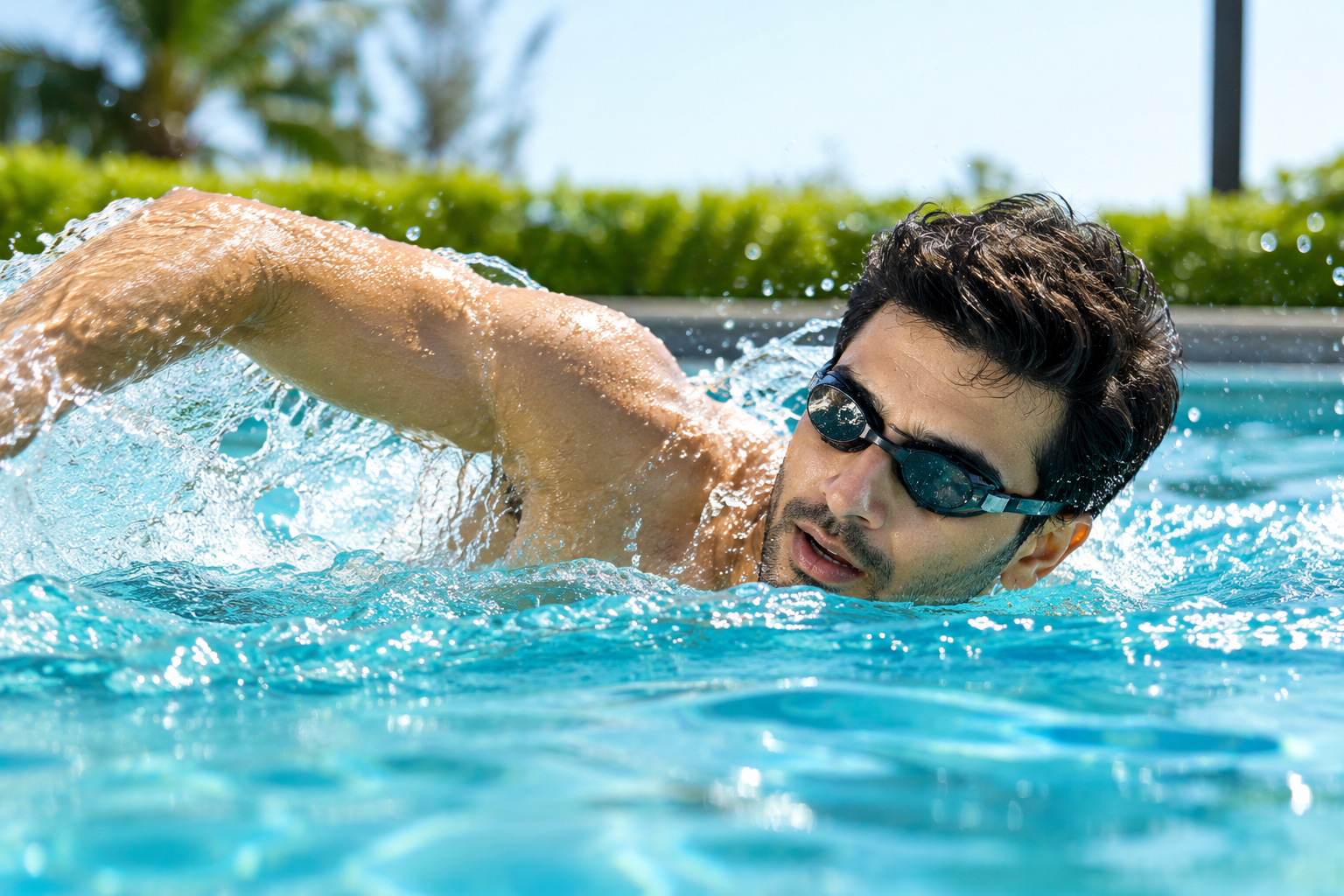
Yes — you can swim with a hair system in most cases. The real question isn’t whether you can swim with a hair system, but which attachment method will actually hold up while you do it, and how you care for it afterward.
Swimming and sweating are two of the most common reasons people worry a system will fail at the worst moment. Understanding the mechanics helps more than hoping for the best.
Why Attachment Method Matters If You Swim With a Hair System
Hair systems aren’t one-size-fits-all. Neither is how well they hold up in water. A system built for a desk job and one built for someone who swims four times a week need different adhesives, tapes, and base materials. Tell your specialist about your routine before the system is fitted, not after. They can then choose an attachment built for water exposure, sweat, and movement — not one that wasn’t.
Types of Attachment and How They Handle Water
Adhesives and tapes don’t all behave the same way underwater. Here’s the rough breakdown:
- Liquid adhesives. Form a strong, water-resistant bond. Often recommended for regular swimmers. Need more frequent professional reapplication.
- Tape systems. Quick to apply and remove. Can soften faster in heavy water exposure, especially warm pool water. Check them often if you swim a lot.
- Clip-in or removable systems. You take them off before swimming, so water exposure is a non-issue. Not a 24/7 solution, though.
- Injection or bonded systems. The most water-resistant option. Bigger commitment and cost.
No single type is “the swimming one” by default. Your specialist should match the attachment to how often you’re in water, how much you sweat, and how much upkeep you want.
How to Swim With a Hair System: Pool, Sea, and Shower
Swimming in a Pool With a Hair System
Chlorine is the main concern, and the damage builds up. One swim won’t hurt. Repeated exposure without rinsing will dry out the hair over time. Chlorine also strips natural oils faster from real-hair systems than synthetic ones, so real-hair wearers may need richer conditioning. Check that your attachment is secure before you get in. Avoid yanking or rubbing the hair while swimming. Rinse with clean water as soon as you’re out.
In the Sea
Salt residue and sand are the two things to watch. Sand is the more annoying of the two — it works into the attachment area and is hard to remove. Salt water can also leave hair feeling stiff if you don’t rinse it out promptly. Rinse with fresh water after your swim, and keep sand away from the base as much as you can while you’re at the beach.
In the Shower
This is the easiest of the three. Use the products your specialist recommends. Handle the base gently instead of scrubbing it. Skip the high-heat drying. Most properly fitted systems handle a normal shower routine without any issue — this is the one environment where you don’t need to overthink it.
Hot Tubs and Saunas
Heat softens adhesive faster than cold or lukewarm water does. A hot tub session can loosen an attachment quicker than an equivalent amount of time in a pool, so treat hot tubs with more caution than regular swimming.
| Activity | Bottom Line | Watch Out For |
|---|---|---|
| Pool | Fine with a suitable attachment | Chlorine buildup — rinse after |
| Sea | Fine with a suitable attachment | Salt and sand in the base |
| Shower | Usually no problem | Gentle handling, avoid heat |
| Gym | Fine | Sweat can loosen the attachment over time |
| Beach | Fine | Sun, sweat, salt, and sand combined |
| Hot tub / sauna | Needs more caution | Heat softens adhesive faster |
Will It Come Off in the Water?
There’s no universal answer. It depends on the adhesive, the base material, how long you’re in the water, how hard you’re moving, how much you sweat, and your own scalp. Tell your specialist how often you swim so they choose the attachment with that in mind — don’t wait to find out the hard way.
If you swim daily, say so explicitly. Daily exposure to chlorine, salt, sweat, and repeated washing wears on an attachment faster than occasional use. It usually means more frequent servicing to keep things secure.
Early Warning Signs of a Loosening Attachment
A system rarely comes off without warning. Watch for:
- Lifting at the edges, especially near the hairline or temples
- A slight “give” when you run a hand over the base
- Itching or tightness that wasn’t there before
- Visible gaps where the base meets your scalp
Catch these early. Getting the attachment checked is far less stressful than a mid-swim surprise.

What About Wearing a Swim Cap?
Sometimes — it’s not a universal fix. A well-fitted cap reduces direct water contact and cuts down chlorine or salt exposure, useful if you swim laps regularly. But a tight cap can also pressure the edges of the system, and in some cases work an already-loosening attachment free instead of protecting it. Ask your specialist before trying one; they’ll know if it suits your particular base and attachment.
Your After-Swim Routine
- Rinse immediately with clean, fresh water to clear chlorine or salt before it sits in the hair.
- Go gentle while it’s wet. Skip aggressive brushing or pulling — wet hair and wet bases are more vulnerable than dry ones.
- Use your specialist’s washing routine, not whatever shampoo is closest to hand.
- Dry it carefully. Pat, don’t rub. A cool or low hairdryer setting is usually safer than air-drying flat, which leaves the base damp longer than it should be.
- Check the attachment. If anything feels loose, get it looked at — don’t try to fix it yourself.
Picking the Right Hair System for an Active Lifestyle
There’s no single “best for swimming” system. It depends on your hair loss pattern, the style you want, your hair’s density and texture, and how often you’re in water or sweating. As a rough guide: lace bases breathe well and look the most natural; polyurethane and hybrid bases tend to hold up better under heavier, more frequent water exposure.
Servicing frequency matters too. A system that needs reattachment every two weeks is a very different commitment for a daily swimmer than for an occasional one — factor that in before you commit to an attachment method.
A Few Myths Worth Clearing Up
“You have to take it off every time you swim.” Not true for most properly attached systems. Choosing the right attachment means you shouldn’t need to.
“Chlorine ruins it instantly.” Also not true. The damage builds up over repeated exposure and comes mostly from skipping the rinse-and-care routine, not from one swim.
“Any tape or adhesive works fine if it’s applied well.” Application matters, but so does the product — some hold up to water exposure better than others regardless of how carefully they’re applied.
Quick FAQ
Can I exercise with a hair system? Yes. Sweat just means you’ll stay on top of maintenance a bit more than someone who isn’t active.
How often should I service my hair system if I swim a lot? There’s no fixed schedule. Ask your specialist to set one based on your actual water exposure, not a guess.
Does chlorine ruin a hair system? Not on its own. Skipping the rinse-and-care routine after repeated pool sessions is what wears it down faster than it should.
Can I use a swim cap to protect my hair system? Sometimes — check with your specialist first, since a tight cap can loosen some attachment types instead of protecting them.
Is regular shampoo safe on a hair system after swimming? Generally no. Most systems do better with products matched to the specific base and hair type; ordinary shampoo can be too harsh or leave residue.
Swimming isn’t something you have to give up if you wear a hair system. Mention it before your system is chosen, and your specialist can build the attachment, base material, and maintenance plan around your actual life.
Related reading: Needs Hair Studio Hair Systems · Hair Replacement Options · Hair Bonding Explained
For general background on non-surgical hair replacement types and materials, see the American Hair Loss Association’s guide.