
Most people start researching a hair system the same way: they Google a few options, look at before-and-after photos, and assume the main decision is picking a colour that matches their existing hair. It isn’t. Hair density, base material, attachment method, hair texture, and your day-to-day routine all shape whether the final result looks like hair or looks like a hairpiece.
A hair system can be an option for people who want to improve the appearance of their hair without undergoing a surgical procedure. Explore Needs Hair Studio’s custom systems to see what’s available.
Here’s what usually gets left out of that first search.
1. Colour Match Is the Easy Part
Beginners tend to focus entirely on matching hair colour, because it’s the most obvious variable. But a hair system that’s the right shade and the wrong everything else — texture, density, direction, hairline shape — still looks off.
A system needs to work with:
- Your existing hair texture
- Hair density
- Hair growth direction
- Current hairstyle
- Hairline shape
- Age and facial features
- Lifestyle
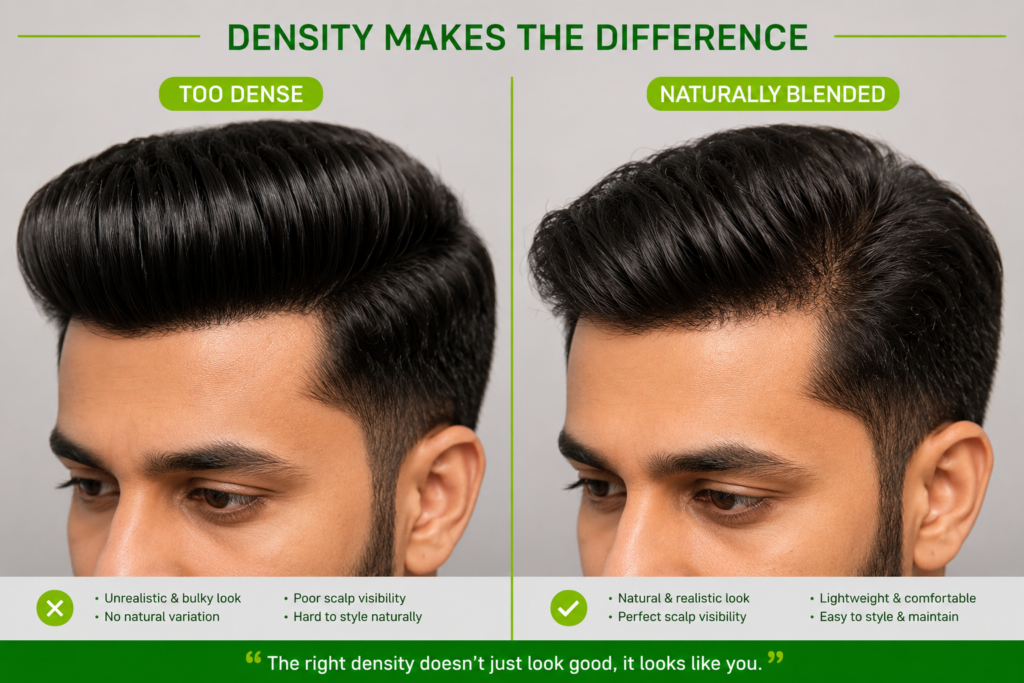
If your side and back hair is naturally thin and you go with a very dense system, the mismatch is what people notice first — not the colour. The point isn’t maximum hair; it’s a hairstyle that blends with what you already have, which is exactly what professional customization is for when you’re picking out a hair system.
2. The Hairline Decides Whether It Looks Real
People fixate on the hair. They should be looking at the hairline.
A hairline that sits too straight, too dense, too low, or simply doesn’t match your age reads as artificial even when the hair itself is good quality. It needs to work with your facial structure and current style — not follow a generic template.
Two technical details matter more here than most people expect: the direction the hair is ventilated in, and how much density the studio builds in right at the front. Different base materials and construction methods change how this looks and feels, which is why hairline design is treated as its own step rather than something that just comes with the system.
3. More Density Isn’t Automatically Better
It’s tempting to assume thicker hair equals a better result. It’s usually the opposite. If your natural hair is on the finer side, a very dense system next to it looks like a wig, not a hairline.
Density should be chosen based on how it sits against your actual hair and the look you’re going for, not the maximum option on the price list. Lighter density tends to look softer and more natural; higher density adds volume but needs the rest of the setup — texture, hairline, styling — to match it, or the extra hair just draws attention to itself.
4. Your Routine Should Decide the System, Not the Other Way Around
Someone who spends the day in an office needs a different setup from someone who’s at the gym daily, plays contact sports, travels constantly, or works outdoors. Before you pick a system, be honest with yourself about a few things: How often do you sweat heavily? Do you travel a lot, or wear a helmet regularly? How much time are you actually willing to spend on maintenance, and do you care more about all-day comfort or the strongest possible hold?
Your answers point toward a specific type of system and attachment method — not the same one everyone else is getting. There’s no single system that works best across the board; it comes down to your hair loss pattern and how you actually live.
5. It Needs Ongoing Maintenance — This Isn’t a One-Time Fix
A hair system isn’t something you fit once and forget about. Like any hair replacement option, it needs regular care to keep looking and performing well:
- Cleaning the system and your scalp
- Checking the attachment
- Proper brushing and styling
- Professional maintenance visits
- Caring for the hair and base material
- Following the studio’s specific care instructions
How often this needs to happen depends on the system, the attachment method, and how your scalp reacts — but skipping it shows fast. Buildup and rough handling are the two most common reasons a well-fitted system starts looking worse over time. The American Hair Loss Association makes a similar point in its guide to non-surgical hair replacement — understanding the maintenance commitment before you start matters as much as picking the right piece.
6. Your First Few Weeks Will Feel Different Than You Expect
Even a well-fitted, professionally installed system takes some adjusting to. You’re getting used to how the base feels, how to style it, how to wash and care for it, possibly how to sleep with it depending on the attachment method — and honestly, just what it’s like to see yourself with a full head of hair again.
Some people adjust within days. Others take a few weeks before it feels normal rather than new. Neither is a sign anything’s wrong — it’s just the learning curve that comes with any change to your daily routine.

7. Who Fits It Matters as Much as What You’re Getting
The system itself is only half the outcome. Customization, fitting, hairline design, colour blending, attachment, and ongoing maintenance are what actually determine whether it looks right — and all of that comes down to the studio, not the product.
Before committing to a provider, it’s worth asking a few direct questions:
What type of systems do you work with? Get specifics on base materials, hair types, densities, and how much can be customized.
How is it customized to me specifically? It should be adjusted to your existing hair, scalp, hairstyle, and the look you want — not fitted from a standard template.
What attachment method do you recommend, and why? Different people need different approaches; a studio that recommends the same method for everyone is a red flag.
How often will I need maintenance visits? This affects both your time and your budget, so get a straight answer upfront.
Can I see actual previous work? Photos of real results tell you more than a sales pitch will.
Needs Hair Studio works across hair replacement, hair bonding, hair fixing, and full non-surgical hair replacement systems, built around individual hair type and lifestyle rather than a one-size-fits-all product.
What to Look For Before Getting a Hair System
Skip past price and raw hair thickness as your main decision points. Focus instead on:
- Natural-looking density for your hair
- Texture that matches
- A hairline built for your face and age
- A base material that’s comfortable for daily wear
- An attachment method suited to your routine
- Accurate colour matching
- A style you can actually maintain
- A realistic maintenance schedule you’re prepared to follow
- A studio that shows you real previous work
Is a Hair System the Right Call — Or Something Else?
A hair system is one route among several. Depending on how much hair loss you’re dealing with and how it’s progressing, medical treatments, surgical restoration, scalp micropigmentation, or volumizing products might suit you better — or work alongside a system rather than instead of one.
The right move is talking through your specific pattern of hair loss with someone qualified to assess it, rather than assuming one solution fits every case.
Before Getting a Hair System, Get This Right
A hair system is never just “adding hair.” The result comes down to the hairline, density, texture, base, attachment method, and how consistently you keep up with maintenance — and getting those details right upfront saves you from redoing the whole process a few months in.
Needs Hair Studio builds systems around your specific hair type, lifestyle, and the look you’re actually going for. If you’re weighing your options, a consultation is the fastest way to find out what fits.