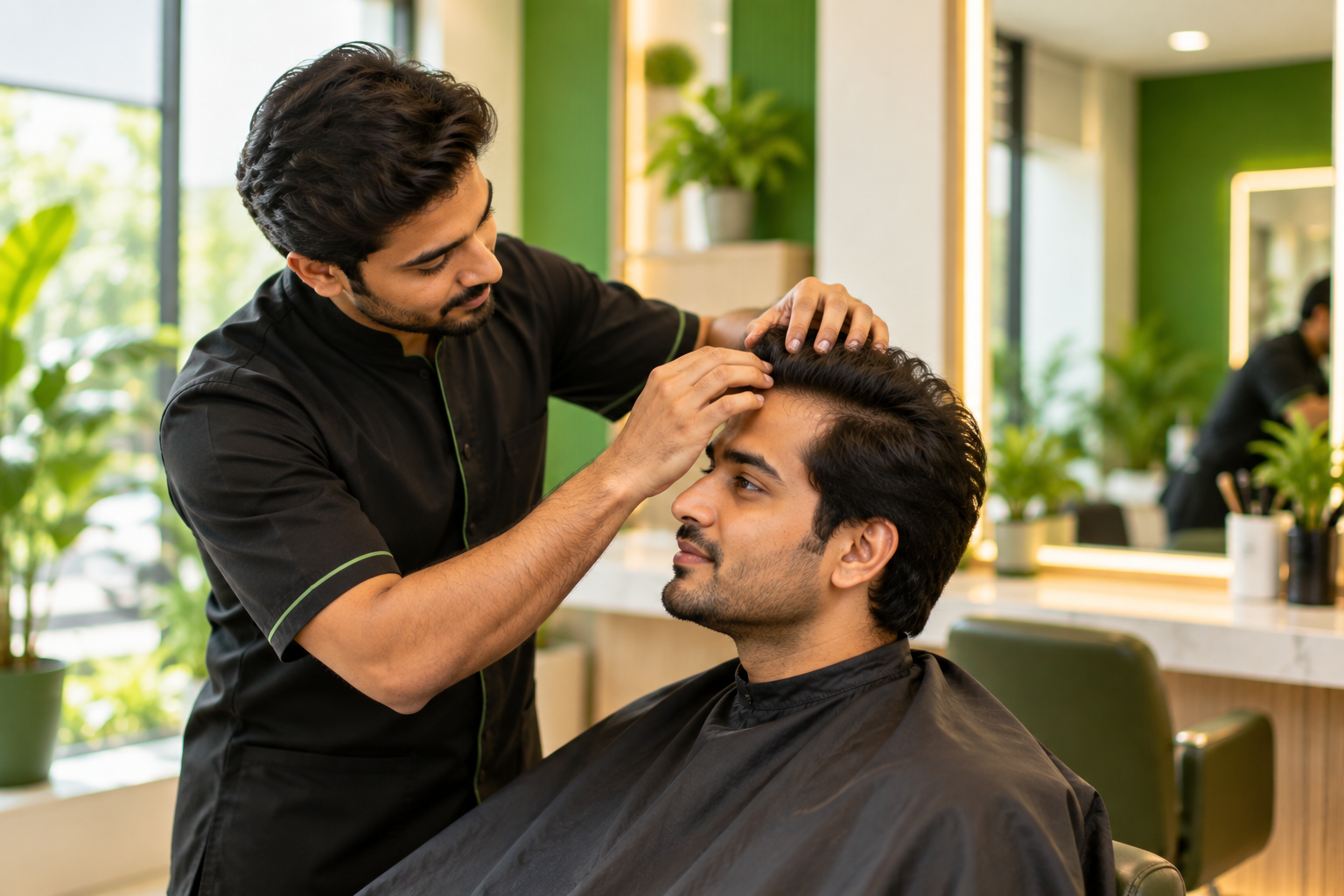
Most people researching hair loss solutions start with the product. They compare hair systems and read about lace versus skin bases. They try to figure out which brand of adhesive lasts longest in humidity. All of that matters eventually. But the decision that shapes everything else happens earlier: which hair studio you walk into first.
The same hair system can look completely different depending on who fits it. A skilled technician at a good hair studio will study your hairline and your growth pattern. They’ll also ask how you actually wear your hair day to day. A rushed one won’t. It shows within a few weeks, once the density starts to look a little too perfect or the edges start to lift.
This guide walks through what separates a hair studio worth trusting from one that’s just selling you a product.
Why the Hair Studio Matters More Than the Hair System
It’s tempting to think of a hair system as something you simply buy, like a pair of shoes in your size. In practice, it’s closer to a haircut than a purchase. The base has to be cut to your scalp shape. The hairline has to be designed around your face, and the colour has to be blended by hand. None of that happens at the factory. It happens at the studio, during your fitting.
This is why two people can order the exact same hair system and end up with very different results. One studio might spend an hour mapping the hairline and testing colour under natural light. Another might hand over a stock piece and send you home. The system is identical. The outcome isn’t.
So before comparing base materials or attachment methods, ask a more basic question first. Does this hair studio actually take the time to get the details right?
What a Good Hair Studio Checks During Your First Visit
A proper consultation looks less like a sales pitch and more like an assessment. Expect a technician to look closely at your remaining hair and your scalp condition first. They should also study the pattern of your hair loss before recommending anything.
They should also ask questions you might not expect — how often you exercise, whether you swim, what your job involves. These aren’t small talk. They directly affect which base material and attachment method will actually hold up for you.
If a studio skips straight to showing you a catalogue without asking any of this, that’s worth noticing. A rushed consultation almost always leads to a rushed fitting, and a rushed fitting rarely ages well.
Density, Texture, and Colour: Where Most Studios Get Lazy
Density is the detail that gets a hair system spotted from across a room, usually because there’s too much of it. Real hair isn’t uniformly thick, even on a full head. It’s denser at the crown and finer near the hairline and temples. A hair studio that understands this will vary the density across the piece instead of applying it evenly. That’s the difference between a system that looks styled and one that looks like a wig.
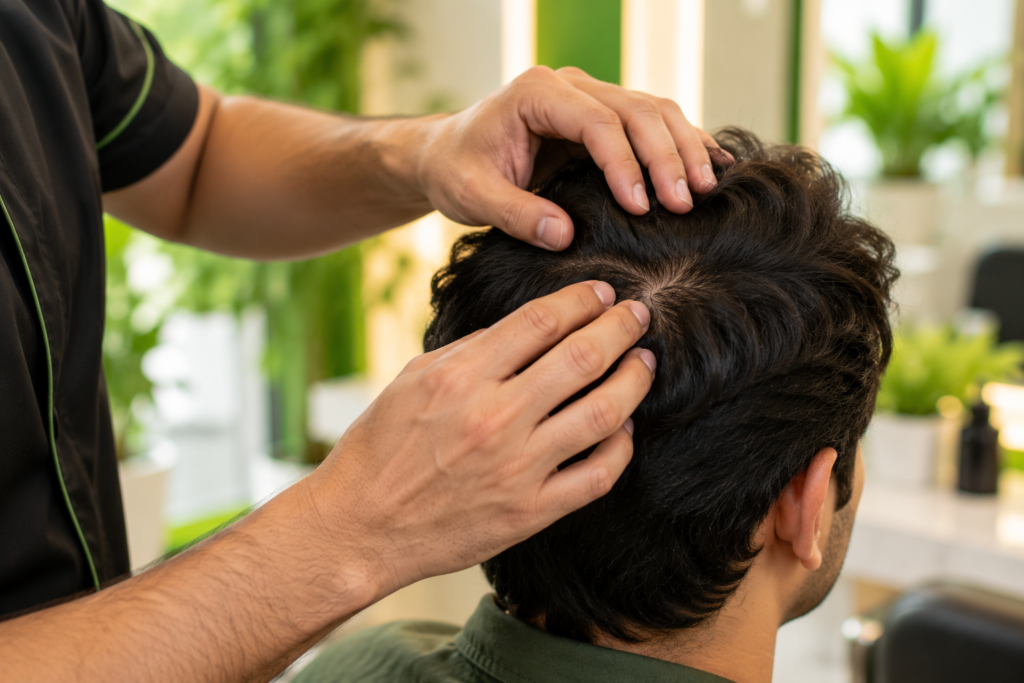
Texture matters just as much, and it’s easy to overlook. Straight hair sitting on top of naturally wavy hair creates a mismatch, and so does the reverse. It’s obvious the moment it’s damp or windy. A good studio will match texture and curl pattern to your natural hair, not just the closest colour swatch.
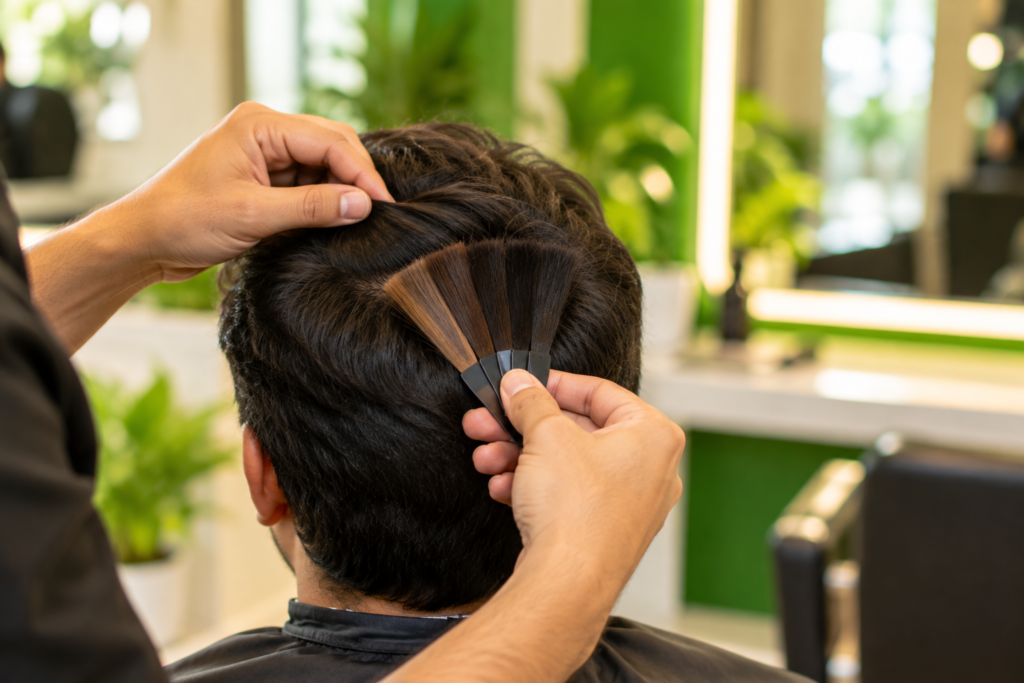
Colour matching itself should account for more than the base shade. Hair isn’t one flat colour. It has natural variation, some grey coming through at the temples, maybe subtle lightening from sun exposure. Studios that blend a few close shades together, rather than using a single dye lot, tend to produce results that hold up in daylight, not just under studio lighting.
Base Material and Attachment: Comfort Is Part of the Fit
Base material affects how a system feels for the ten or twelve hours a day you’re actually wearing it. That makes it more than a minor spec. Lace bases breathe well and look natural but need gentler handling. Thin skin bases give a very natural scalp appearance but can feel warmer. Mono bases sit in between on both counts. None of these is universally “better.” The right one depends on your climate, your activity level, and how sensitive your scalp is.
Attachment method follows a similar logic. Tape and liquid adhesives are common and give strong hold. But they need regular maintenance and can irritate sensitive skin over time. Clips work for people who want to remove the system daily. A hair studio that pushes one method regardless of your lifestyle is optimising for their convenience, not your comfort.
Questions Worth Asking Before You Book
A short conversation before your appointment tends to reveal more than a website ever will. It’s worth asking:
- How long has this hair studio been fitting systems? Can you see before-and-after photos of real clients?
- What happens if the colour or density needs adjusting after the first few weeks?
- How often will the system need maintenance, and what does that involve?
- Is there a trial period, or is the first fitting final?
None of these questions require technical knowledge. They just require the studio to answer clearly, which is often the best indicator of how they’ll handle problems later.
Maintenance: The Part of the Decision People Forget
Choosing a hair studio isn’t a one-time decision. It’s closer to choosing a hairdresser you’ll see regularly for years. Most systems need reattachment, cleaning, and trimming every few weeks. The quality of that ongoing care matters as much as the original fitting.
Ask what a typical maintenance visit looks like, and how much it costs over a year. Don’t just ask about the price of the first system. A studio that’s upfront about the full cost of ownership, including how styling and haircuts factor in, is usually more trustworthy than one that only quotes the initial fee.
Your daily routine matters here too. If you swim regularly or work in a hot, humid environment, say so during the consultation. A hair studio that adjusts its recommendation based on your actual life is doing its job properly. It shouldn’t just hand you a generic package.
A Few Signs a Hair Studio Isn’t the Right Fit
Not every studio is a good match for every person, and that’s fine. But a few patterns are worth watching for. If a consultation feels more like a countdown to a sale than an assessment, that’s a signal. If nobody can explain why they’re recommending a specific base or attachment method, that’s another.
Pressure to decide immediately is probably the clearest red flag of all. A hair studio confident in its work generally doesn’t need to rush you. It isn’t worried about you comparing options elsewhere.
Hair Systems Aren’t the Only Option
It’s also worth remembering that a hair system is one of several approaches to hair loss, not the only one. <a href=”https://www.aad.org/public/diseases/hair-loss/insider/types” target=”_blank” rel=”noopener noreferrer”>Hair loss has several distinct causes</a>. The right treatment often depends on which one applies to you, which is part of why a proper consultation matters first. Depending on the extent and cause of your hair loss, medical treatments, scalp micropigmentation, or a volumizing treatment might suit you better than a full system. A studio that mentions these alternatives is generally one worth trusting, even when they’re not the more profitable option.
Choosing Needs Hair Studio
At Needs Hair Studio, fittings start with a genuine assessment, not a catalogue. Our team looks at your hairline, density, and lifestyle before recommending anything. We’re also upfront about maintenance and long-term cost from the first conversation.
If you’d like to see the range of options first, browse our hair systems or read more about non-surgical hair replacement. For a closer look at how we work, our why choose us page covers our approach in more detail. Our FAQ answers the questions most first-time clients have.
When you’re ready, you can book a consultation at any of our locations. There’s no obligation — just an honest look at what would actually work for you.