
Hair System Aftercare: The Routine That Actually Matters
Most of what determines how a hair system looks six months in has nothing to do with the system itself. It comes down to hair system aftercare — the daily habits around washing, drying, and reattaching. These habits either extend a unit’s life or quietly shorten it. Two people can buy the exact same system. A year later, the results can look completely different. The difference is almost always the routine, not the product.
Why Hair System Aftercare Matters More Than the Purchase Decision
A spec defines a hair system — base material, density, attachment method. None of that spec accounts for how it’s treated day to day. Sebum, sweat, product buildup, and mechanical stress from sleeping, styling, and reattaching wear on a system continuously. Good hair system aftercare slows that wear down. Skip it, and even a well-made unit starts looking tired well before it should.
This is also where people misjudge cost. The purchase price covers the system itself. How consistent the aftercare routine is shapes the ongoing expense — replacement adhesive, cleaning products, professional servicing. A system cared for properly usually needs less professional intervention than one that’s neglected between visits.
There’s also a comfort factor that rarely gets mentioned. A system that’s clean, dry, and properly maintained simply feels better to wear. There’s less itching, less awareness of it being there, less temptation to fidget with it in public. People who neglect hair system aftercare often report the opposite. A nagging discomfort makes them hyper-aware of the system rather than forgetting about it, which defeats a lot of the point of wearing one. Confidence with a hair system isn’t just about how it looks in the mirror. It’s about not thinking about it during the day, and that only happens when the aftercare underneath is solid.
The Daily Care Routine
Daily hair system aftercare isn’t complicated. But it needs to happen every day, not just when convenient.
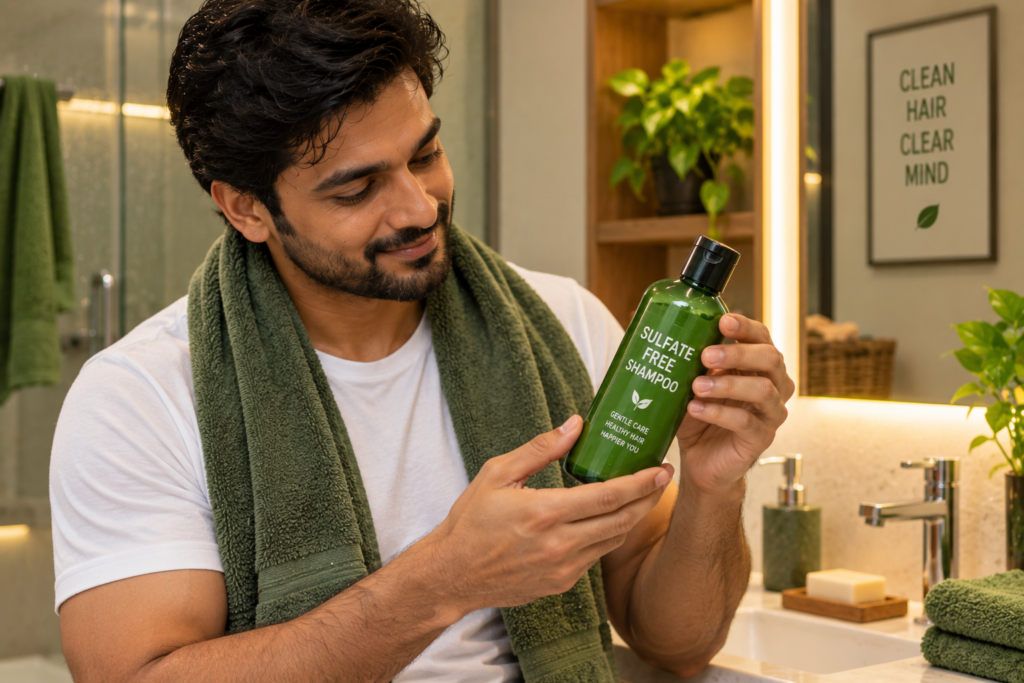
Clean the scalp underneath during each removal, not just the base itself. Use a sulfate-free, gentle shampoo — harsh cleansers dry out the scalp and the base faster than they should wear. Dry the base fully before reattaching. A damp base against a damp scalp invites irritation. Avoid sleeping with the system on unless the attachment method allows continuous wear. Friction against a pillow accelerates fraying at the edges otherwise.
None of these steps take long individually. Skipping even one, repeatedly, adds up over a few months. Our full daily care guide for non-surgical hair replacement systems walks through the complete routine, including product picks by base type.
Washing at night rather than in a rushed morning gives the base time to dry fully before it goes back on. That matters more than people assume. Building the wash into an evening routine — alongside brushing teeth or a skincare step already on autopilot — tends to survive busy weeks better than a routine that needs extra morning time.
Product choice deserves a second look too, beyond just “sulfate-free.” Heavy conditioners and leave-in treatments made for natural hair can leave residue on a base. Natural hair would simply shed that residue over time; a system’s base won’t. A lighter, rinse-clean formula suited to hair systems avoids that buildup. It’s worth asking a fitting specialist for a specific recommendation rather than assuming any sulfate-free label works the same as another.
Weekly and Biweekly Maintenance Checks
Beyond daily cleaning, a hair system aftercare routine needs a deeper check every one to two weeks. The exact interval depends on how often someone wears the system. This is when clip alignment, bond edges, and overall fit deserve closer attention than a quick morning glance allows. Loose or rusted clips need attention before they fail outright. A bond edge that looks slightly lifted is far easier to fix now than after another week pushes the lift further.
Scalp health deserves the same periodic attention. A scalp that’s persistently itchy, tender, or unusually oily under the base isn’t something to work around. It’s a sign the routine needs an adjustment, or that a professional should take a look. We’ve covered the specific symptoms in our guide to common hair patch side effects. The American Academy of Dermatology’s scalp care guidance covers the same fundamentals. A healthy scalp is the foundation everything else depends on, system or no system.
The weekly check is also the right time to look at the hair itself, not just the base and the scalp. Fibers near the hairline take the most friction from daily handling and tend to show wear first. A slight roughness, or a few strands that feel drier than the rest, is worth noting before it spreads. Catching this early usually means a targeted conditioning treatment does the job. Ignore that wear for a few months, and the same friction can mean an earlier-than-expected full replacement of the front section.
What Professional Servicing Adds
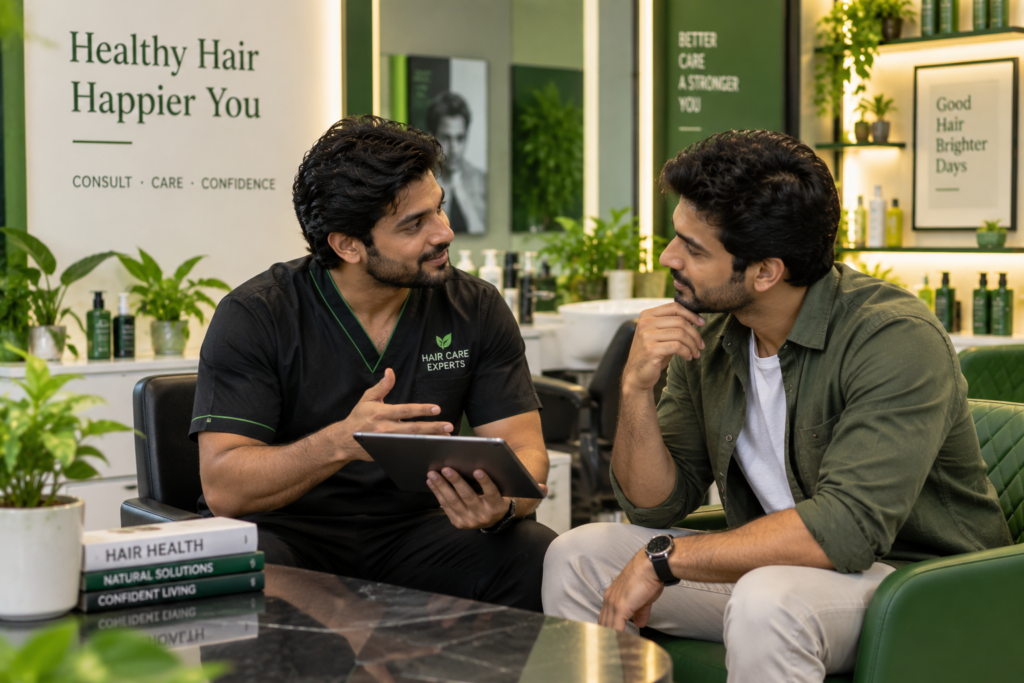
Home care handles the day-to-day. But hair system aftercare also depends on regular professional servicing that home routines can’t replicate. A technician can rebond edges properly and deep-clean the base in ways home products don’t reach. They can also catch early wear before it becomes visible damage. This matters more for bonded and taped systems than clip-in units, since bonding degrades in ways that aren’t always obvious from the surface.
How often that servicing needs to happen depends on the attachment method. Permanent or semi-permanent bonding needs more frequent attention than temporary, removable systems do. We cover that distinction in our comparison of permanent versus temporary hair fixing options. Getting this interval right is as much a part of hair system aftercare as anything done at home.
It’s worth treating the first few servicing visits after getting a new system as a calibration period rather than a fixed routine. Every scalp produces sebum and sweat at a slightly different rate. Every lifestyle puts different stress on a bond too — someone who works outdoors or exercises daily needs a different servicing rhythm than someone at a desk job. A good technician adjusts the recommended interval after seeing how a specific system holds up on a specific person. That’s better than applying the same generic schedule to everyone who walks through the door.
Common Hair System Aftercare Mistakes
A few patterns show up repeatedly in systems that age faster than expected. Overwashing strips the base and the bond. Underwashing lets buildup accumulate instead. Both extremes cause problems. The right frequency usually sits in the middle, adjusted for how much a person sweats and how often they wear the system. Using whatever shampoo happens to be in the shower, rather than a product suited to the base material, is another common shortcut. It costs more in the long run than it saves in convenience.
Skipping scheduled servicing until something visibly goes wrong is probably the most expensive mistake. By the time a problem is visible, it’s usually been developing for a while. The AAD’s hair loss resource center makes a similar point about natural hair and scalp conditions generally. Catching irritation early is almost always cheaper than treating it once it takes hold. The same logic applies directly to a system sitting on that scalp.
Storage mistakes are less obvious but just as common. Leaving a removed system loose in a drawer, folded against itself, or near direct heat and sunlight distorts the base shape over time. It dulls the hair fibers too. Keeping a system on a proper stand or case, somewhere cool and out of direct light, protects it during the hours no one wears it — just as much as good handling protects it during wear.
Building a Routine That Sticks
The systems that hold up best over a year or more usually belong to people who treat aftercare as a fixed part of their schedule. They don’t wait until they remember it. Setting a specific day for the weekly check, keeping the same cleaning products on hand, and booking servicing in advance all turn hair system aftercare into a habit. That beats leaving it as an occasional task people only remember sometimes. Our guide to choosing a hair patch is worth revisiting here too. The right base and attachment method for your lifestyle makes the whole routine easier to keep up with from the start. Our maintenance guide covers the longer-term servicing schedule in full.
Get the routine right early. A hair system stays looking the way it did on day one for a lot longer than most people expect.